
The World’s 3rd Largest Crane Vessel Transited the Bosphorus
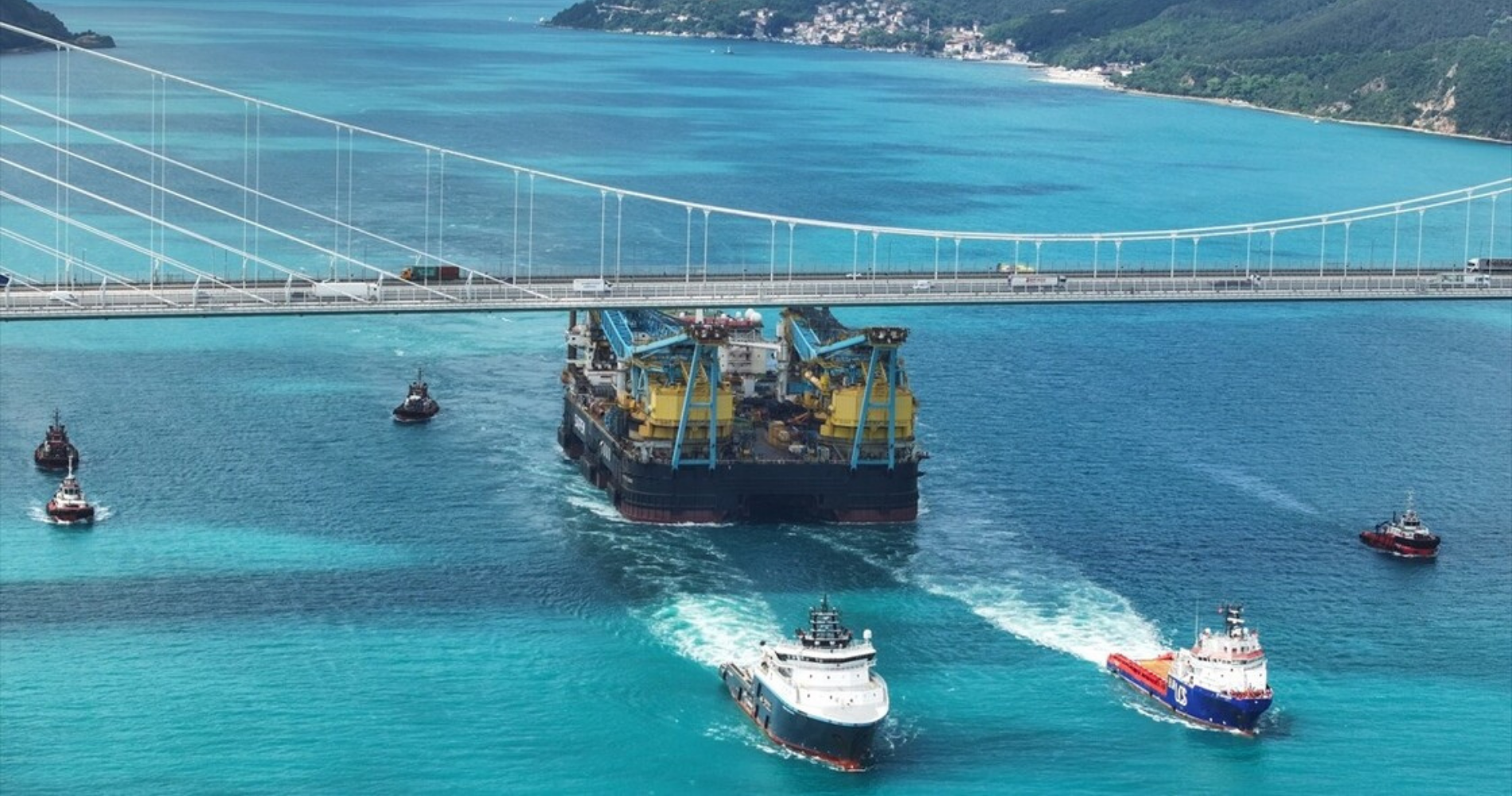
Saipem 7000, the world’s third-largest semi-submersible crane vessel, transited the Bosphorus while en route to support natural gas pipeline operations. The massive vessel, sailing from Libya to Romania, entered the Istanbul Strait in the early morning under strict safety measures.
Controlled Passage and Extensive Coordination
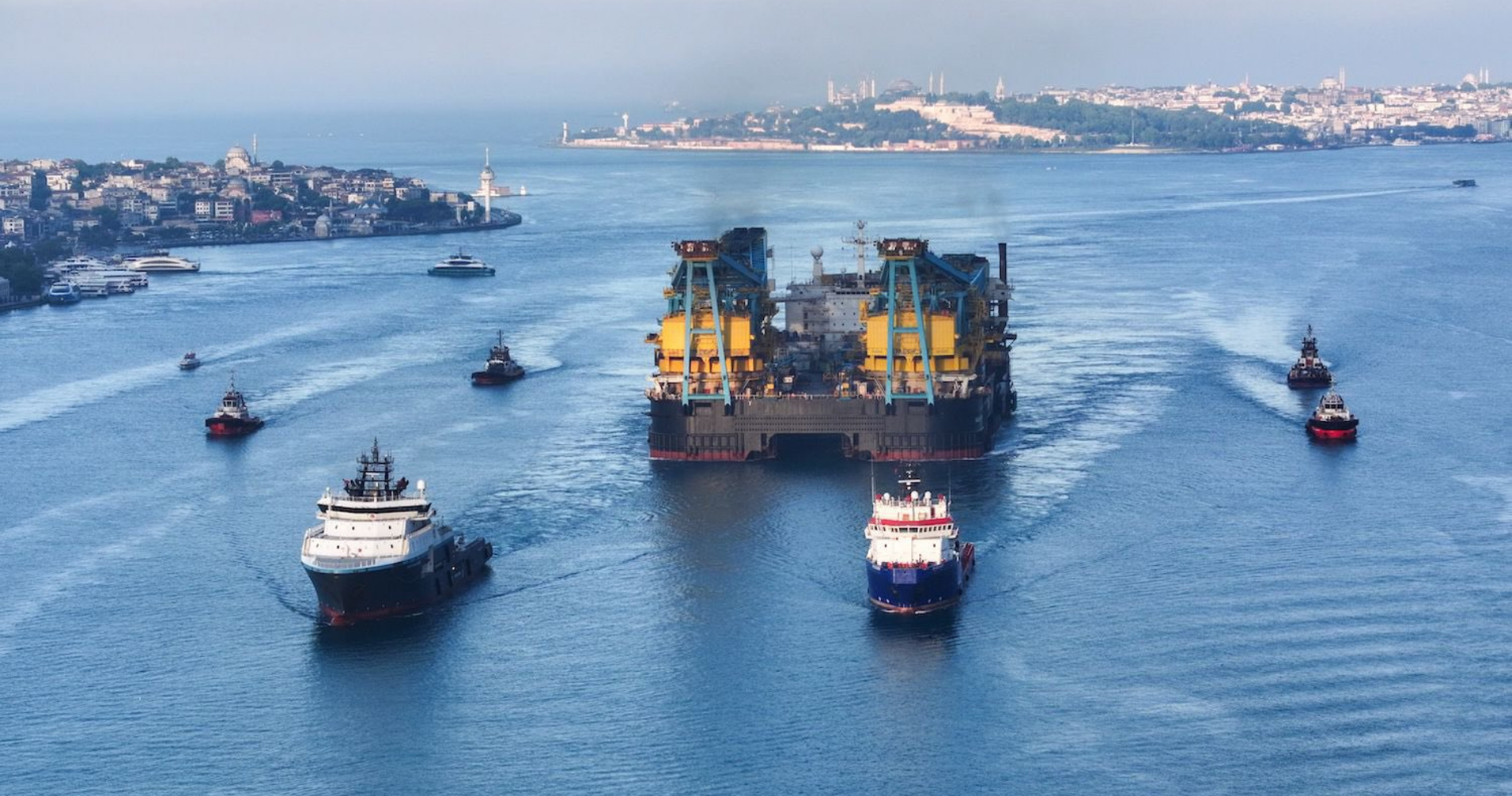
The United Kingdom-flagged vessel entered the Bosphorus with tugboat assistance. During the transit, teams from the Turkish Directorate General of Coastal Safety actively participated in the operation. Türkiye’s largest emergency response vessel, Nenehatun, also escorted the ship, while multiple rescue tugboats ensured the operation was carried out safely.
Due to safety precautions, the Bosphorus was temporarily closed to transit vessel traffic during the passage. This procedure is considered essential for ensuring safe navigation of vessels with large tonnage and high superstructures.
Special Technical Measures for Passage
Specific technical measures were implemented to allow the massive crane vessel to safely pass under the Bosphorus bridges:
- Six pilot captains and multiple rescue tugboats accompanied the vessel
- Ballast tanks were filled to lower the vessel’s height
- Crane booms and towers were lowered
- The vessel’s height was reduced to approximately 57 meters
Such measures are standard practice for ensuring the safe passage of large vessels through narrow waterways like the Bosphorus.
Saipem 7000: An Offshore Engineering Giant
Saipem 7000 holds a significant position in the maritime and energy sectors with its advanced technical capabilities:
- 198 meters in length
- 135 meters structural height
- 117,000 gross tonnage
- Ability to lift up to 14,000 tons in a single operation
- Capacity to lay pipelines in depths exceeding 2,000 meters
These features enable the vessel to play a critical role in offshore energy projects.
Key Role in Energy Projects
Saipem 7000 previously participated in the Blue Stream Natural Gas Project in the Black Sea, where it carried out pipeline laying operations at depths of approximately 2,150 meters.
Such vessels are essential for:
- natural gas pipeline installations
- offshore platform construction
- heavy lifting operations
Logistics and Maritime Perspective
The Bosphorus transit of Saipem 7000 represents not only a vessel movement but also a key component of global energy logistics.
These types of operations highlight:
- the intercontinental integration of energy infrastructure
- the strategic role of maritime transport in heavy cargo logistics
- the importance of critical waterways in global trade


 Popular News

.png)