

Mersin Port Connects to Europe and the Middle East

Mersin Port, one of Türkiye’s most critical logistics hubs, is becoming part of a strategic corridor linking Europe and the Middle East through newly implemented railway investments.
Minister of Transport and Infrastructure Abdulkadir Uraloğlu inspected the ongoing works within the scope of the Mersin–Adana–Osmaniye–Gaziantep High-Speed Rail Project and emphasized that the project will go beyond a regional transportation investment, evolving into a logistics line capable of influencing global trade flows.
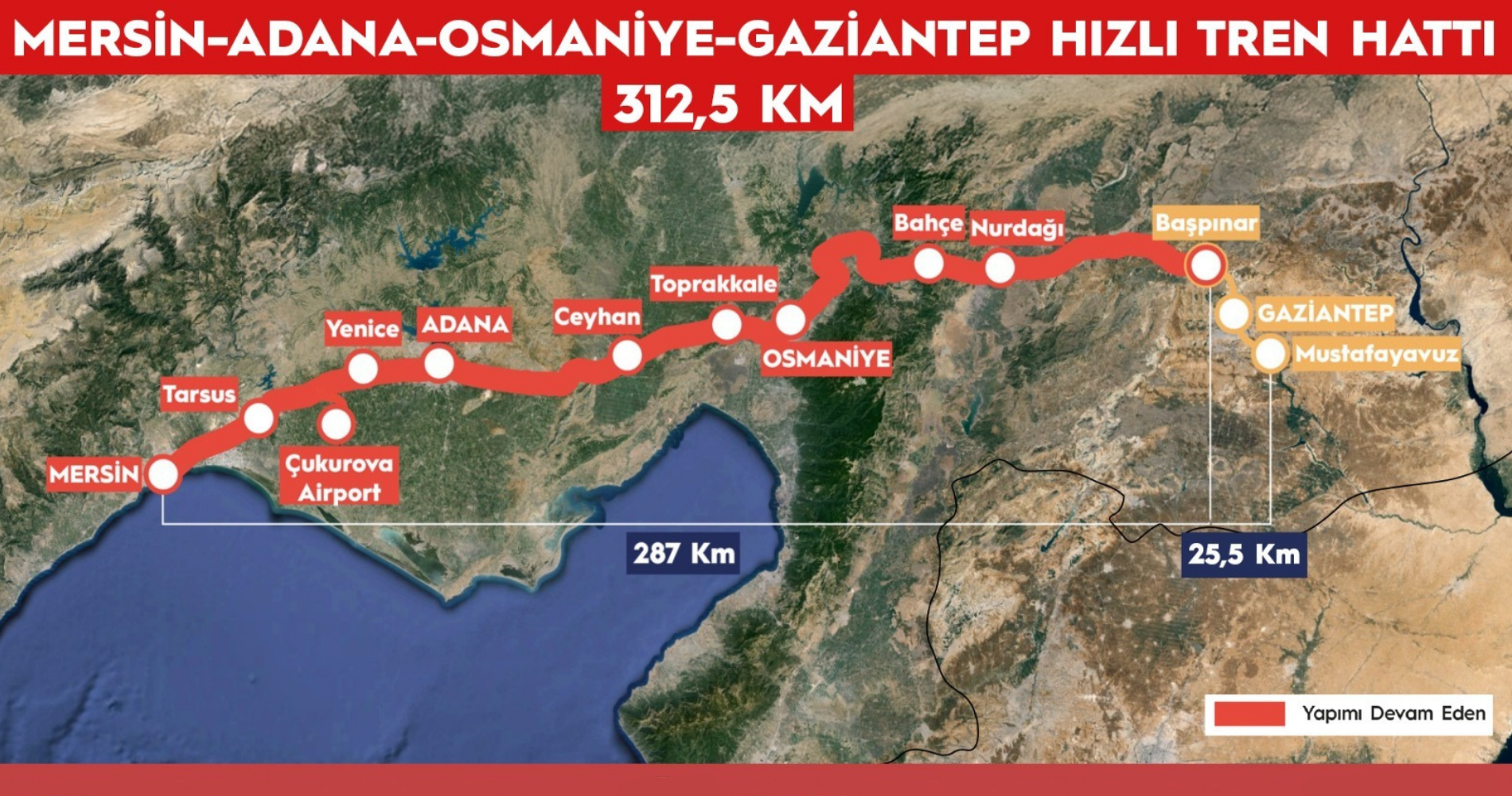
312-Kilometer Line Transforming into a Global Corridor
The high-speed rail line, with a total length of 312 kilometers, will extend from Mersin to Gaziantep. However, the project’s significance lies in its future transformation into a trade corridor that will:
- connect to Europe via Kapıkule
- link to Iraq and the Faw Port via Ovaköy
ultimately extending to the Persian Gulf.
This integration will position Türkiye as a key logistics bridge between Europe and the Middle East.
Mersin Port Strengthens Its Strategic Role
With the completion of the project, Mersin Port is set to become one of the most important logistics gateways in the Mediterranean.
Through integration with the Development Road Project:
- cargo arriving from the Persian Gulf will be transported to Europe via Türkiye
- Türkiye will gain a stronger position within alternative global trade routes
This development is expected to create a significant strategic advantage in diversifying global supply chains.
Underground Passage and Urban Transformation in Tarsus
In the Tarsus urban section, one of the key parts of the project, efforts are underway to eliminate the railway’s dividing effect within the city.
As part of the redesign:
- a 2,400-meter section will be moved underground
- approximately 100,000 square meters of surface area will be converted into a social and urban space
This initiative will both improve urban mobility and enhance overall quality of life.
Speed and Capacity Increase
With trains capable of reaching speeds of 200 km/h, the project will reduce:
- travel time between Mersin and Gaziantep
from 6.5 hours to 2 hours and 15 minutes
Once completed, the line is expected to handle:
- over 3 million passengers annually
- approximately 37 million tons of cargo per year
Türkiye Strengthens Its Position in Global Logistics
This railway investment centered around Mersin not only enhances transportation infrastructure but also stands out as a project that will redefine Türkiye’s role in global trade networks.
Source: UAB


 Popular News
.png)