

Türkiye’s Critical Corridors and 2028 Targets
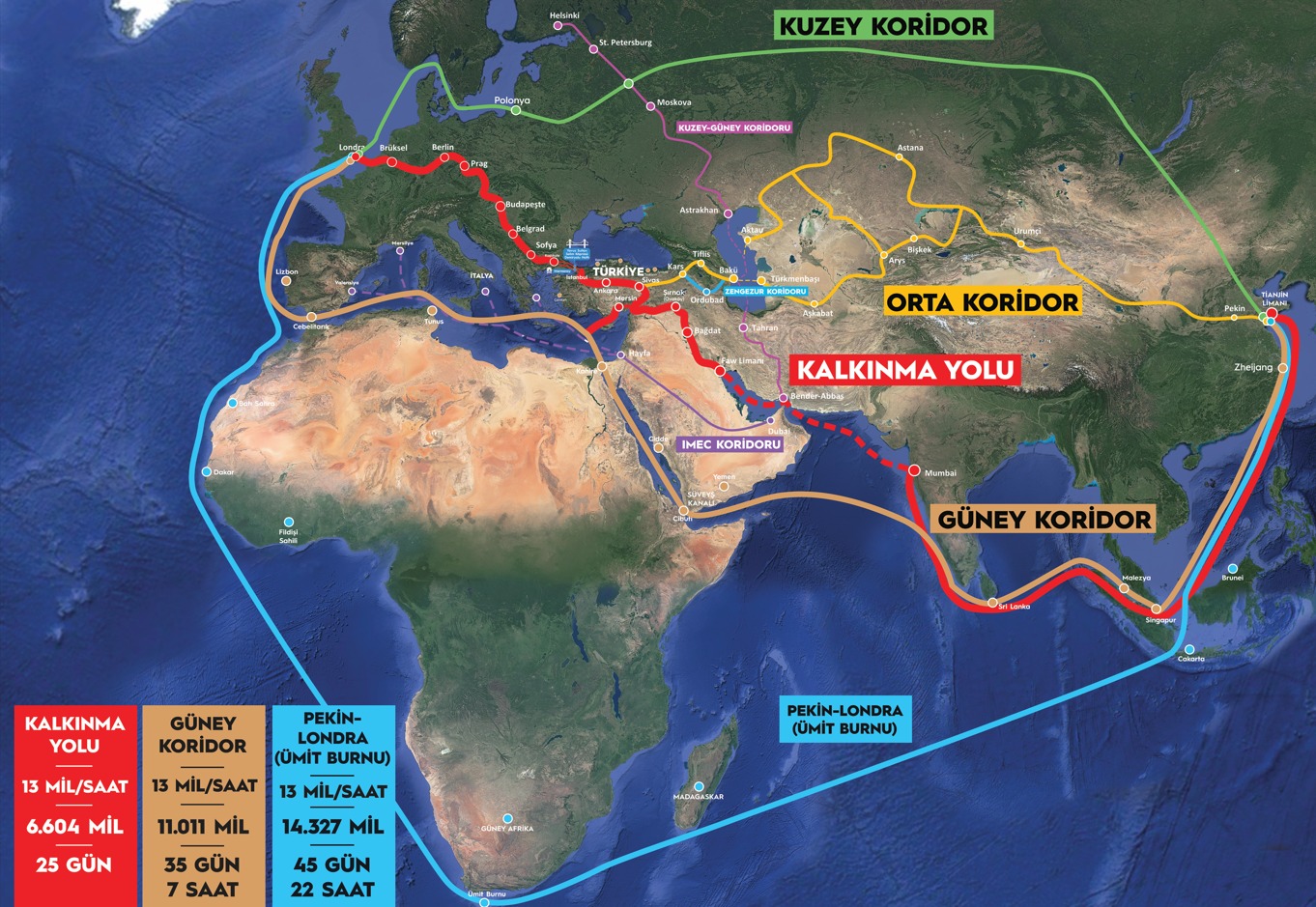
Türkiye is advancing toward an increasingly strategic position within the global logistics ecosystem, driven by rapidly shifting global trade routes, geopolitical fluctuations, and supply chain restructuring. Despite global uncertainties in 2025, the sector demonstrated strong performance and has entered a comprehensive transformation process aligned with the 2028 target of reaching 40 billion dollars in logistics service exports.
Experts emphasize that Türkiye’s unique location at the center of the East–West axis, its robust multimodal transport capabilities, and accelerated infrastructure investments have the potential to elevate the country from a regional hub to a global transit powerhouse.
Success Amid Geopolitical Risks: Türkiye’s 2025–2026 Performance Stands Out
In 2025—marked by a contraction in global trade, the Red Sea crisis, and rising Middle East‑related risks—Türkiye’s logistics sector showcased remarkable resilience with 31.5 billion dollars in service exports. According to experts, this achievement was made possible by Türkiye’s flexible transport capacity, strong private‑sector investments, and its natural geographical advantages.
This performance demonstrates that as Türkiye advances toward its 2028 ambitions, it is successfully building a crisis‑resilient logistics infrastructure, securing a growing share of global supply chain realignments.
Strengthening Influence on International Corridors: Middle Corridor, Development Road, and Zangezur Route
At the heart of Türkiye’s logistics future lie major international corridor projects. These three major routes—especially relevant given the current disruptions in the Red Sea (vessels diverting around the Cape of Good Hope instead of transiting the Suez Canal)—are shaping the country’s global competitiveness:
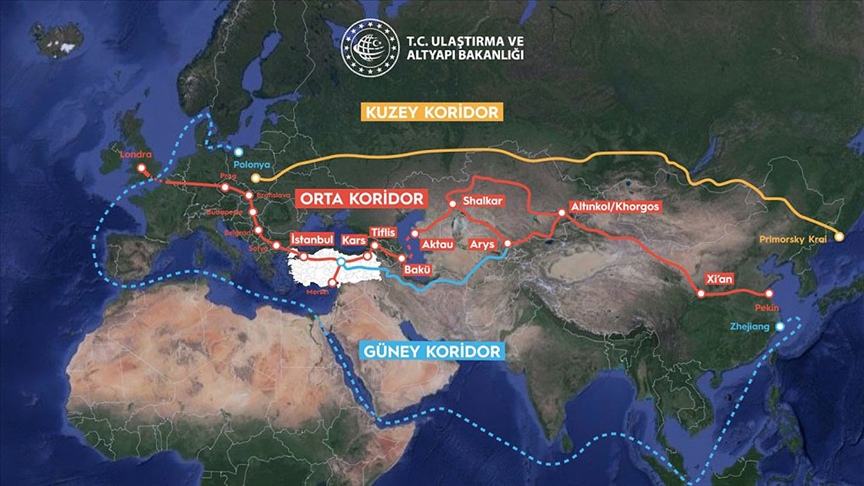
Middle Corridor (Trans‑Caspian International Transport Route)
Connecting China–Kazakhstan–Caspian Sea–Azerbaijan–Georgia–Türkiye, this corridor provides a strategic alternative to northern routes passing through Russia and southern routes via the Suez Canal.
Amid geopolitical crises (such as the war in Ukraine and the Red Sea disruptions), global supply chains have shifted toward alternative routes, and the Middle Corridor has emerged as one of the safest and fastest options. Türkiye serves as the essential European gateway of this corridor, reinforcing its central role in regional logistics.
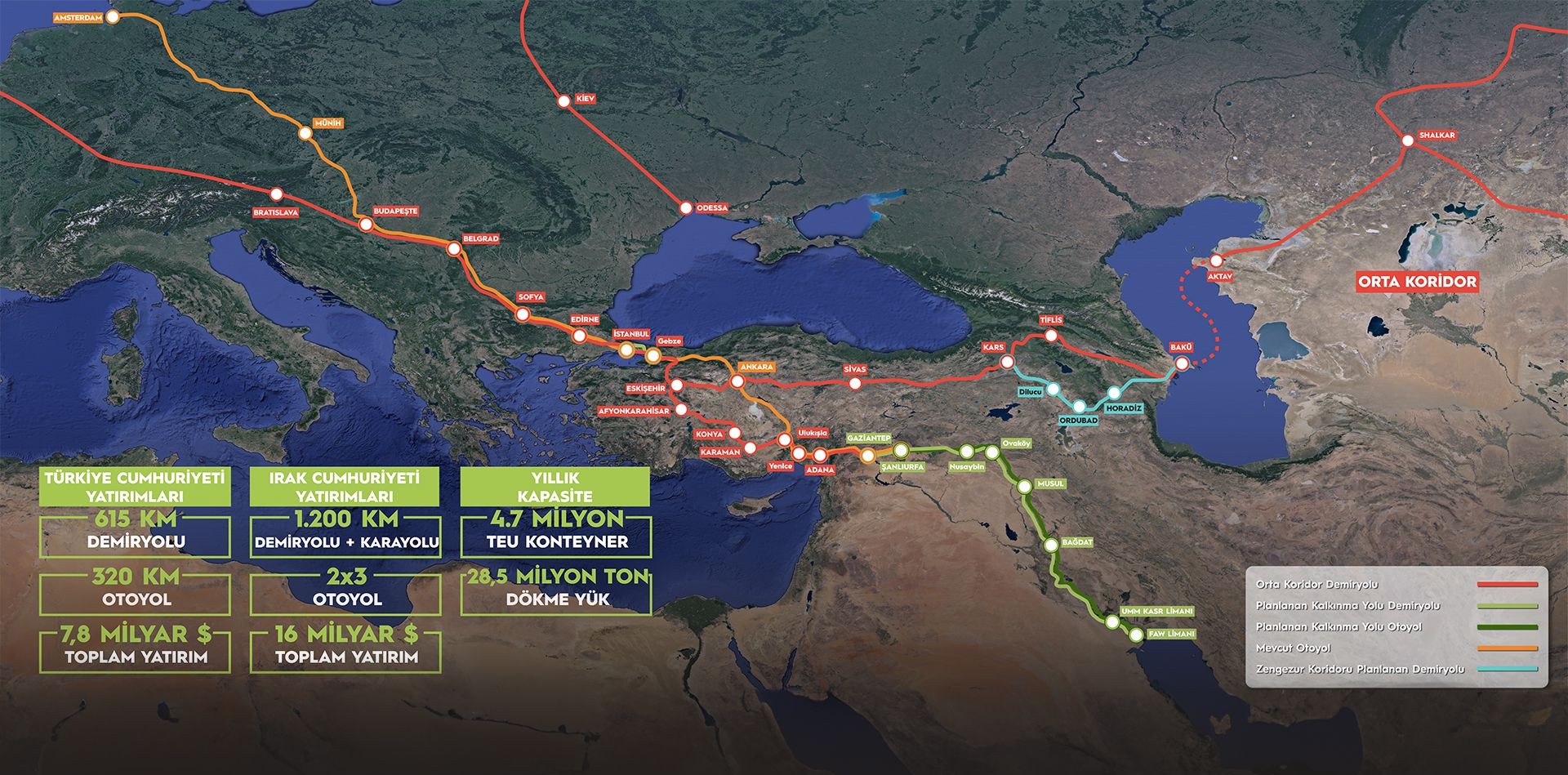
Development Road (Iraq–Türkiye Corridor)
This corridor, established between Türkiye and Iraq, will link the Persian Gulf to Europe via Türkiye, creating a new trade axis that integrates both road and rail transport.
The project aims to deliver up to 15 days of time savings compared to the Suez Canal route for shipments traveling from Asia to Europe.
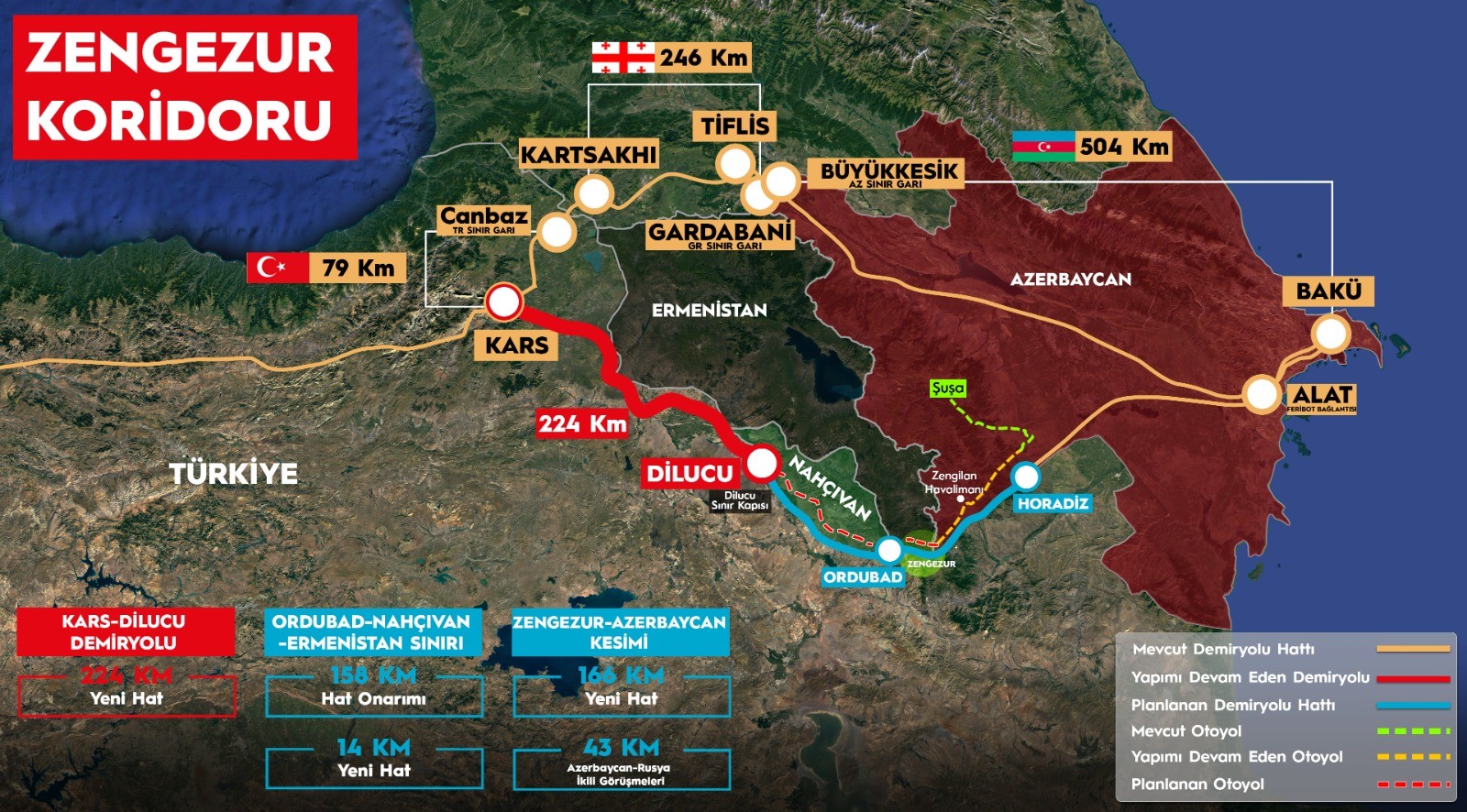
Zangezur Corridor
The completion of this route—providing a direct connection from Azerbaijan to Türkiye—will strengthen Türkiye’s access to the Caucasus and significantly enhance the rail capacity of the Middle Corridor.
Connectivity at the Center of the 2028 Vision
Türkiye’s goal of increasing logistics service exports to 40 billion dollars by 2028 can only be achieved not through domestic capacity expansion alone, but through the completion and efficient operation of the three major corridors that will position Türkiye at the crossroads of global trade.
- The speed advantage of the Middle Corridor,
- The Development Road’s potential to create a true alternative to the Suez Canal,
- The Zangezur Corridor’s role in deepening integration across the Turkic World,
collectively form the backbone of Türkiye’s vision to become a global logistics hub.
Source: Lojistik Hattı, UAB, UAB


 Popular News

.png)