

Türkiye’s First Domestically Produced High-Speed Train Reaches 225 km/h
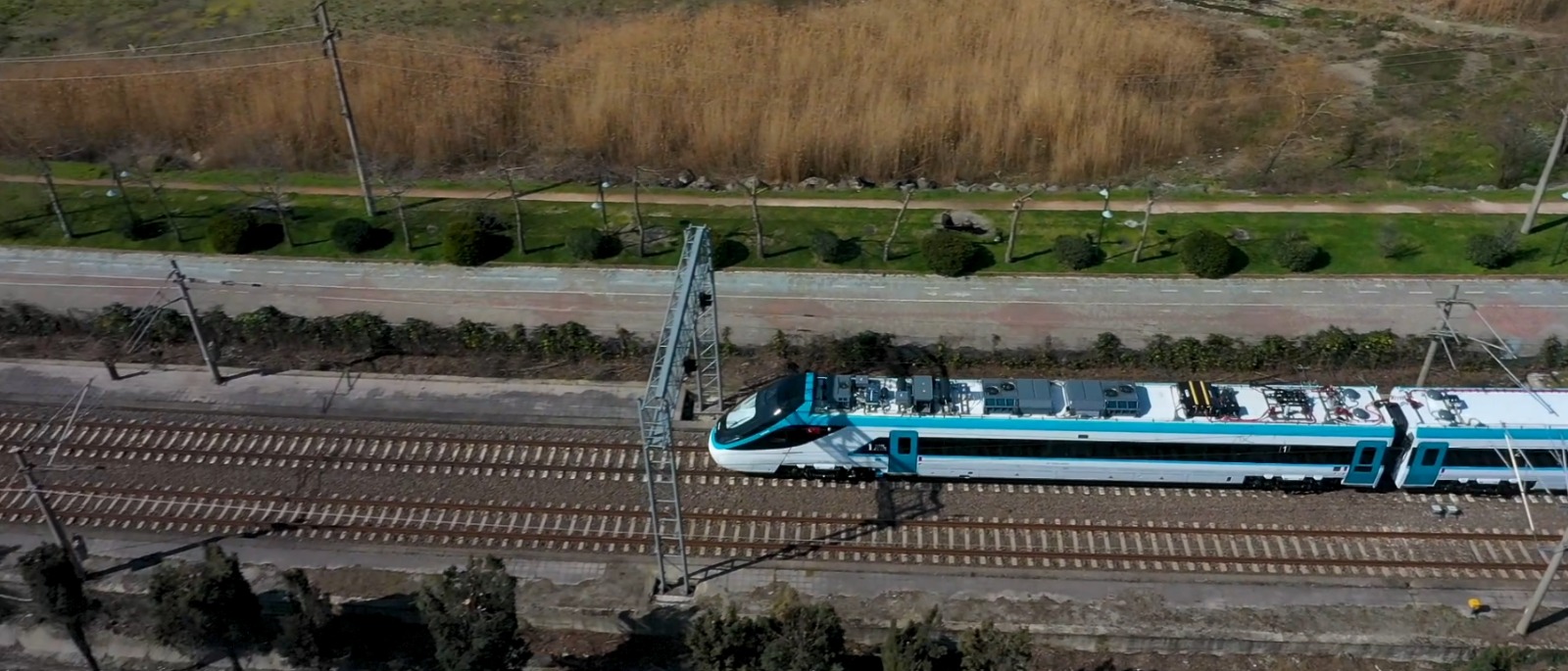
Türkiye’s first high-speed train, produced with domestic and national resources, has passed another major milestone during its testing phase. Minister of Transport and Infrastructure Abdulkadir Uraloğlu announced that the National Electric High-Speed Train Set successfully reached a speed of 225 kilometers per hour on the second day of dynamic braking tests.
Minister Uraloğlu stated that following the completion of production, test runs of the high-speed train developed by Türkiye Rail System Vehicles Industry Inc. (TÜRASAŞ) had begun, emphasizing that the dynamic track tests are progressing as planned.
Significant Success in Critical Tests
Pointing out that dynamic braking tests are among the most critical phases of high-speed train projects, Uraloğlu said that achieving such success in a short time is a concrete indicator of domestic engineering capabilities and technological competence. He made the following statement:
“Türkiye’s first high-speed train, which we completed using domestic and national resources, reached a speed of 225 km/h on just the second day of dynamic braking tests. Successfully completing the most critical phase of testing in as little as two days has clearly demonstrated the level our engineering and workmanship have reached.”
To Enter Service with an Operating Speed of 225 km/h
Once the testing processes are completed, the train set is planned to provide passenger transport on Türkiye’s high-speed rail lines with an operating speed of 225 km/h. Uraloğlu noted that tests are currently ongoing on the Mithatpaşa–Bilecik line, and that test runs will later be carried out on other high-speed rail lines across the country.
Stating that “this performance represents an important milestone demonstrating how far our domestic technologies have come,” Uraloğlu emphasized that the project will contribute to reducing Türkiye’s dependence on foreign suppliers in the rail systems sector and strengthening domestic production capacity.
Source: UAB


 Popular News


.png)