

The World Bank Approves $2 Billion Financing for the Istanbul North Rail Crossing Project
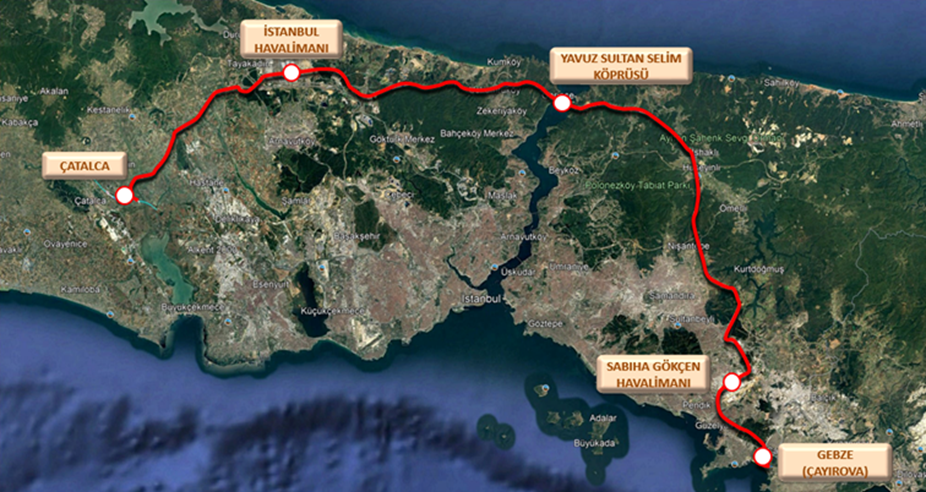
The World Bank has approved a $2 billion loan for the İstanbul North Rail Crossing Project (INRAIL), which will significantly enhance İstanbul’s logistics capacity. This major step also paves the way for an international financing package totaling $6.75 billion, playing a critical role in advancing the project.
As part of the INRAIL project—expected to cost $8.3 billion in total—a 127‑kilometer electrified and high‑capacity railway line will be constructed. This line will cross the Yavuz Sultan Selim Bridge, connecting the city’s two sides via rail and forming a new logistics ring around İstanbul. In addition, both airports will be integrated into the national railway network, strengthening the city’s overall transportation infrastructure.
Once completed, the INRAIL project is expected to increase Istanbul Strait’s annual freight handling capacity from 3 million tons to 50 million tons. This dramatic expansion represents a strategic transformation that will significantly enhance Türkiye’s effectiveness within international trade corridors.
INRAIL Will Connect to International Corridors
The new railway line is designed to integrate with major international routes such as the Middle Corridor, the Iraq Development Road, and the Türkiye–EU railway corridor. This integration is expected to support Türkiye’s goal of becoming a regional logistics hub and further strengthen its position in global trade flows.
Approximately half of the project route will consist of tunnels, making the line more resilient to natural risks such as extreme heat, flooding, strong winds, and forest fires. This will substantially improve both continuity of transport and infrastructure safety. Additionally, the INRAIL project is expected to generate 99,000 direct jobs along the railway corridor and up to 414,000 total jobs.
In addition to the World Bank, many international institutions are supporting the financing process of the İstanbul North Rail Crossing Project, including the Asian Development Bank, Asian Infrastructure Investment Bank, European Bank for Reconstruction and Development, Islamic Development Bank, and the OPEC Fund for International Development.
Source: CNBC-E


 Popular News
.png)