
Where Are the Ports of the United States? U.S. Container Ports
The United States stands out as one of the countries with the most intense trade activity in the world. A large portion of this trade is carried out by sea. Therefore, ports in the U.S. hold a very important place in terms of the country’s commercial circulation and trade volume. Located on different coasts, these ports form the backbone of both domestic and international trade.
Ports on the East Coast of the United States
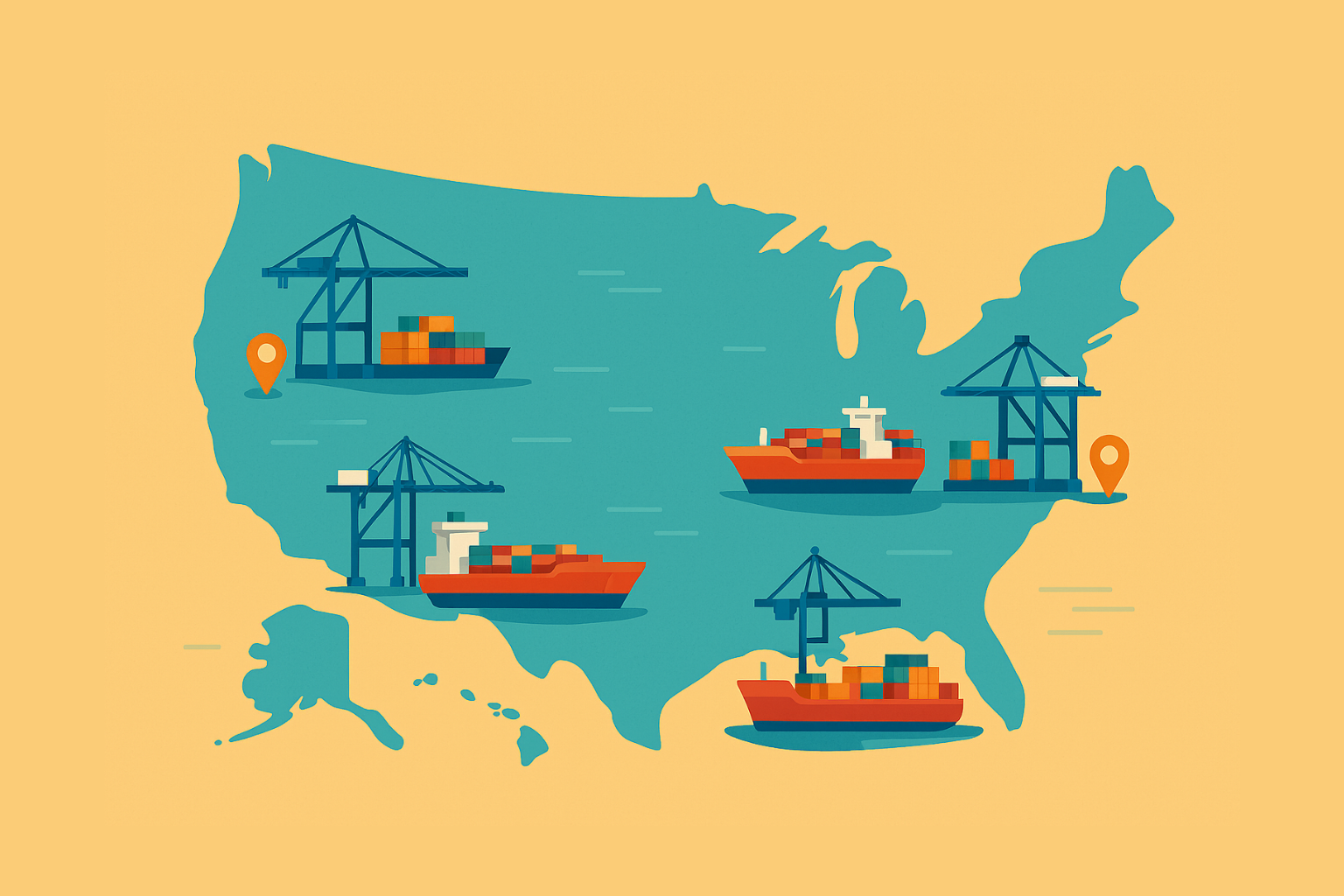
The East Coast of the United States stretches along the Atlantic Ocean. The ports located here are of great importance, especially for trade with Africa and Europe, as well as the Middle East. These ports play a key role in increasing America’s trade capacity. Major ports on the East Coast include the Port of New York and New Jersey, the Port of Savannah, and the Port of Charleston.
The ports of New York and New Jersey are among the largest ports in the United States. They are also among the busiest container ports on the continent. The Port of Savannah plays a critical role particularly in the export of agricultural products and industrial goods. The Port of Charleston, on the other hand, is known as one of the largest ports in the southeastern United States and has become a rapidly growing trade hub.
Ports on the West Coast of the United States
The West Coast of the United States borders the Pacific Ocean and serves as a gateway to Asia. Therefore, the ports located here are highly significant in terms of trade relations. These ports are among the most important gateways for goods transported to and from Asia. Major ports on the West Coast include the Port of Los Angeles, the Port of Long Beach, and the Port of Oakland.
The Port of Los Angeles is the most important container port on the West Coast. It is the largest container port in the United States and handles millions of containers annually. The Port of Long Beach is located next to the Port of Los Angeles, and together they form one of the busiest port complexes in the world. These ports play a critical role in the distribution of goods arriving from Asia across the United States. The Port of Oakland serves the San Francisco Bay Area and is an important gateway for trade with Asia.
Gulf Coast Ports
Ports located along the Gulf Coast also hold a very important position among U.S. ports. Gulf Coast ports serve as a gateway to the Gulf of Mexico, which gives them a strategic role in trade with Latin America. This region, prominent among American port cities, acts as a hub for transporting valuable and sensitive goods such as agricultural products, chemicals, and petroleum. Major Gulf Coast ports include the Port of Houston, the Port of New Orleans, and the Port of Mobile.
The Port of Houston is one of the largest ports in the United States and serves Texas, known as the country’s energy hub. This port plays a critical role in the export of oil and natural gas products. The Port of New Orleans is located at the mouth of the Mississippi River and serves as a gateway to the world for goods coming from the interior regions of the U.S. The Port of Mobile is the largest port in the state of Alabama and one of the key trade centers on the Gulf Coast.
The Most Important Ports in the United States
Container ports are considered the backbone of the U.S. economy in terms of both imports and exports. Major U.S. ports are located in both northern and southern regions of the country. Among North American ports, Los Angeles, New York, and Houston stand out, while in the southern regions, ports such as Miami and Jacksonville are prominent. Each of these ports serves as a gateway connecting the United States to the world. For example, the Port of Miami is particularly important for trade with Latin America and is considered the heart of trade in tropical fruits, textiles, and coffee. The Port of Jacksonville, on the other hand, is known as one of the largest automobile import centers on the East Coast of the United States.


 Popular News

.png)