
What Is TEU? Differences Between TEU and FEU
TEU and FEU, which enable the standardized measurement of cargo in international container transportation, are among the most important concepts in the logistics industry. These units, widely used especially in maritime transport and container logistics, play a crucial role in accurate capacity planning and cost optimization.
In this article, you can find detailed answers to questions such as what TEU and FEU mean, the differences between them, and how they are calculated.
What Is TEU?
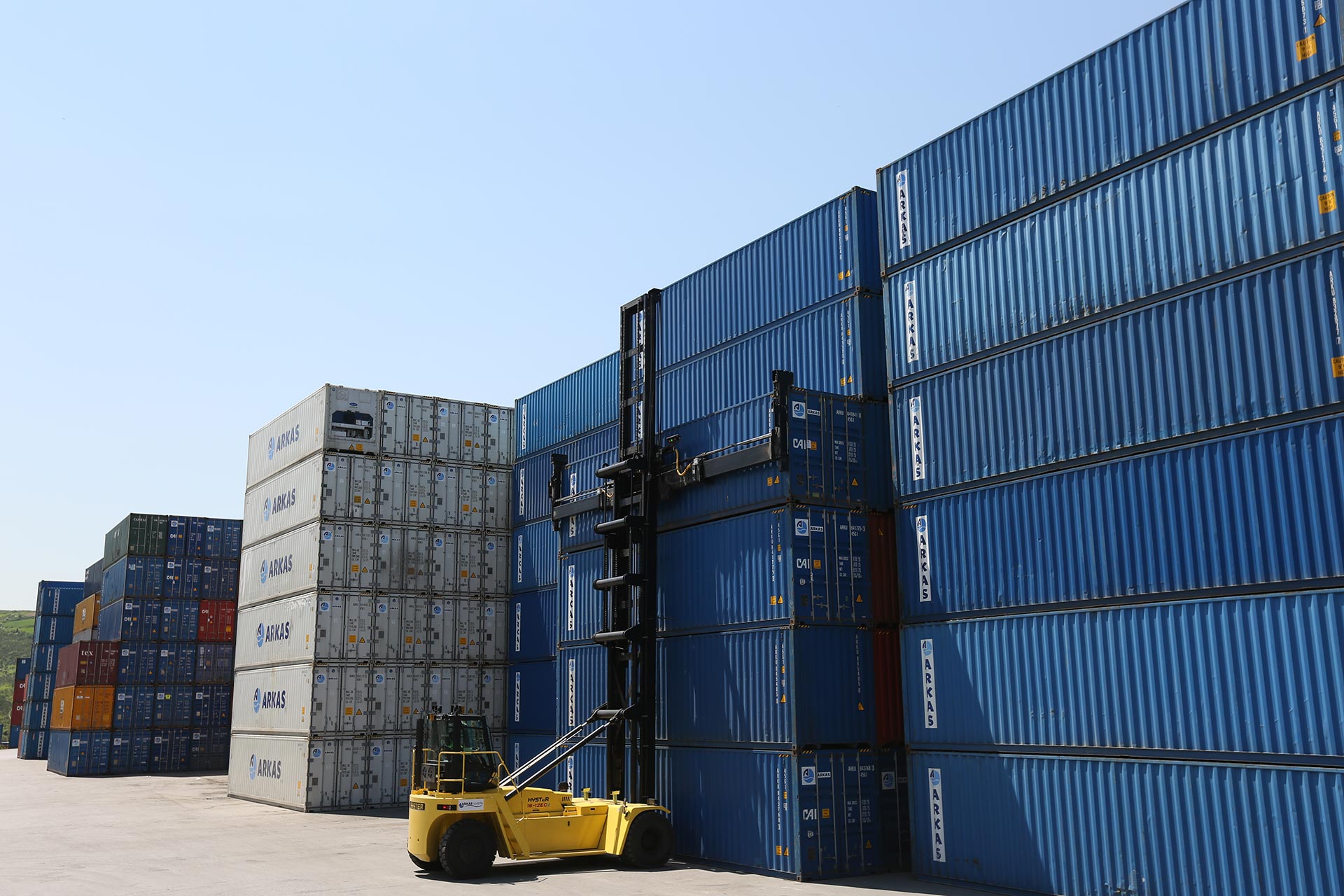
TEU, one of the fundamental units used in international container transportation, stands for Twenty-foot Equivalent Unit. According to this measurement system, 1 TEU represents a standard container with a length of 20 feet, or approximately 6 meters. Widely used in logistics and maritime transport, TEU allows cargo to be measured within a standardized system, helping operations to be carried out in a more planned and efficient manner.
With the standardization of container sizes, TEU has played an important role in making global trade more organized and sustainable. This standardization helps reduce costs and save time in transportation processes. In this sense, TEU contributes significantly to both economic and operational efficiency in logistics activities.
However, depending on factors such as the shipping route, cargo characteristics, and operational requirements, TEU can also be a safe and cost-effective option in certain situations.
What Is FEU?
FEU is a container measurement unit with a larger capacity compared to TEU. Standing for Forty-foot Equivalent Unit, FEU represents a standard container measuring 40 feet, or approximately 12 meters in length. As an international standard in logistics, FEU is equal to 2 TEU in size and is typically preferred for transporting large-volume cargo.
Thanks to its high capacity, FEU allows more goods to be transported within a single container. This reduces transportation costs and optimizes operational processes. Additionally, fewer handling operations help minimize the risk of cargo damage, ensuring a safer transportation process. For this reason, FEU offers a significant advantage, especially for companies dealing with large-scale production and high-volume shipments.
How Are TEU and FEU Calculated?
Capacity calculation in container transportation is based on a straightforward principle. A container with a length of 20 feet is considered 1 TEU, while a 40-foot container corresponds to 2 TEU.
Accordingly, the number of containers required can be easily determined based on the cargo volume. For example, transporting 10 containers of 20 feet each equals 10 TEU. The same capacity can also be transported with 5 containers of 40 feet, which corresponds to 5 FEU. Similarly, 5 containers of 40 feet equal a total of 10 TEU capacity.
This method of calculation enables accurate and efficient capacity planning in logistics operations, providing significant advantages in terms of both time and cost.
How Much Weight Does a TEU Carry? TEU Capacity
The carrying capacity of a TEU container may vary depending on its type, structure, and the nature of the cargo. On average, a TEU container has an empty weight of around 2.2 tons. With a volume capacity of approximately 33 cubic meters, it can carry up to about 28 tons including its own weight. This means that the net payload capacity of a TEU is typically around 25 tons.
Similarly, a FEU container, being twice the size, generally offers a net payload capacity of approximately 50 tons.


 Popular News
.png)