
Advantages of Air Freight in Cold Chain & Pharmaceutical Logistics
The pharmaceutical industry is one of the rare sectors where the margin for error must be virtually zero. Products such as biotechnological drugs, vaccines, and blood and plasma derivatives must be maintained within specific temperature ranges at every stage from production facilities to the patient. This level of sensitivity elevates logistics processes far beyond conventional transportation models.
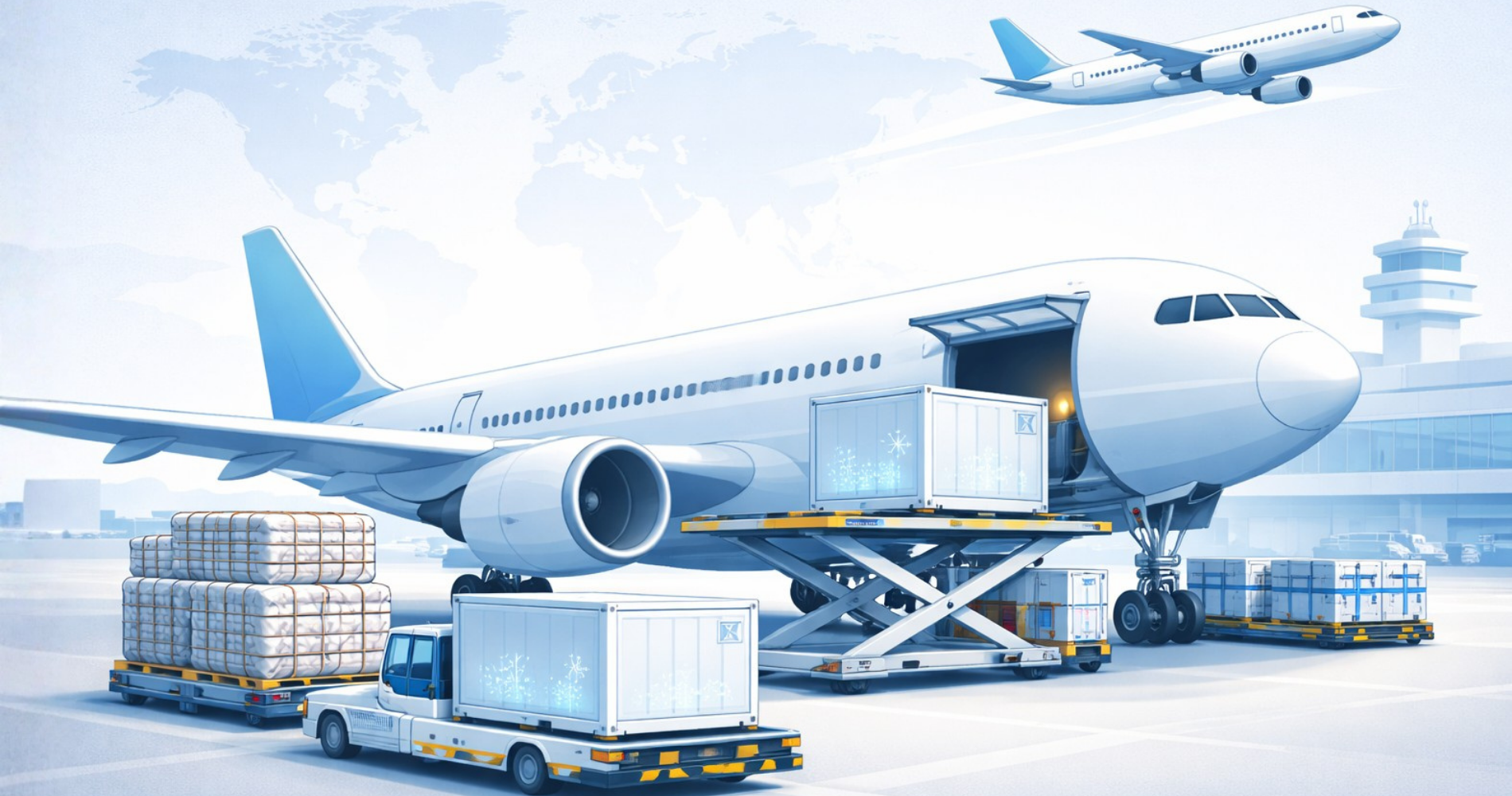
With the global growth of pharmaceutical trade, air freight logistics has become central to cold chain operations thanks to its speed and control advantages. Air transportation ensures the continuity of healthcare systems by preserving product integrity even over long distances.
Speed and Time Management in Cold Chain Transportation
In cold chain operations, time is a critical factor that directly affects product safety. Deviation from required temperature ranges can reduce drug efficacy or render products unusable. Therefore, cold chain logistics requires transportation models that ensure the fastest possible delivery.
Compared to road and sea freight, air transportation offers significantly shorter transit times, directly addressing this need. Especially in intercontinental shipments, the time advantage—often measured in hours—greatly reduces the risk of temperature deviations. Fast delivery also enhances operational flexibility for healthcare systems in responding to urgent pharmaceutical needs.
Security Advantages of Air Freight in Pharmaceutical Logistics
In pharmaceutical logistics, security extends beyond physical protection. Data tracking, traceability, and process transparency are integral components of this concept. Air freight solutions stand out with advanced security protocols and controlled cargo environments.
Dedicated cold storage facilities at airports prevent products from being exposed to external conditions during transit. Moreover, international air carriers operate in compliance with IATA and Good Distribution Practices (GDP) standards, ensuring that pharmaceuticals are transported in full regulatory compliance.
These security advantages are supported by the following factors:
- Controlled cargo processes through authorized personnel and restricted access areas
- Temperature stability via dedicated cargo compartments for cold chain products
- Use of validated cold storage facilities at transfer and holding points
- Continuous monitoring of product integrity before and after flights
- Full traceability through digital recording and documentation systems
- Minimized error margins through standardized operating procedures (SOPs) aligned with international regulations
Technology-Driven Air Freight Ecosystem
Today, air transportation is a logistics ecosystem supported by advanced technologies. Cold chain shipments rely on active and passive temperature-controlled containers, smart sensors, and real-time data monitoring systems.
These technologies enable continuous tracking of critical parameters such as temperature, humidity, and shock throughout the journey. In case of deviations, early intervention becomes possible, preventing product losses. This technological infrastructure is indispensable, particularly for high-value and sensitive pharmaceuticals.
Importance of Temperature-Controlled Transport in Healthcare Products
Not all healthcare products require the same level of sensitivity, but strict temperature ranges are critical for most pharmaceuticals. Temperature-controlled transportation directly affects not only product quality but also patient safety.
Air freight meets these requirements through stable cargo hold conditions and specialized equipment. Additionally, integrated logistics networks between airports minimize ground waiting times, reducing temperature fluctuations. This system has played a crucial role in ensuring smooth distribution of vaccines and pharmaceuticals, particularly during global health crises and pandemics.
Global Supply Chain Efficiency
Pharmaceutical production and consumption often occur in different regions, making a flawless global supply chain essential. Air freight pharmaceutical logistics meets this need by enabling fast and standardized connections across countries and continents.
Through international flight networks, uninterrupted flow is ensured from manufacturing centers to distribution points. This is especially critical for time-sensitive products such as rare disease treatments and personalized medicines, supporting the sustainability of healthcare systems. Air freight remains an invisible yet strategic backbone of the global healthcare ecosystem.
Regulatory and Compliance Advantages
Pharmaceutical transportation is subject to far stricter regulations than other logistics sectors. National and international authorities define every step of the process in detail. Air freight operators have extensive experience in complying with these regulations.
Certified personnel, validated equipment, and rigorous documentation processes make air transportation highly reliable in terms of regulatory compliance. This translates into reduced operational risks for pharmaceutical manufacturers and distributors.
Cold chain pharmaceutical logistics requires the simultaneous integration of speed, security, technology, and regulatory compliance. Air transportation uniquely delivers all four of these critical elements under one framework.
With its short transit times, advanced monitoring systems, and internationally compliant processes, air freight sets the benchmark for quality in pharmaceutical logistics. Particularly for sensitive and high-value products, air freight solutions are a strategic component in maintaining the continuity of healthcare systems.
For these reasons, air transportation will continue to play a vital role in cold chain operations both today and in the future.


 Popular News
.png)