
What is the Polar Silk Road?
Global warming is one of the most important issues today. Especially in the future, it is expected to significantly affect both life and trade. Even now, we can observe that global warming has both negative and positive effects on international trade. Due to global warming, the melting of ice in the Arctic Ocean has led to the emergence of new trade routes in the North Pole. These newly opened maritime trade routes have made international trade more efficient.
These new routes are called the Polar Silk Road. The sea routes that have opened up thanks to the melting of ocean ice have brought a new dimension to maritime trade. Today, sea transportation accounts for the largest share of global trade. Therefore, the opening of new routes means an increase in the volume of maritime trade. The Polar Silk Road has become one of these new maritime trade destinations.
Where Are the Polar Silk Road Routes?
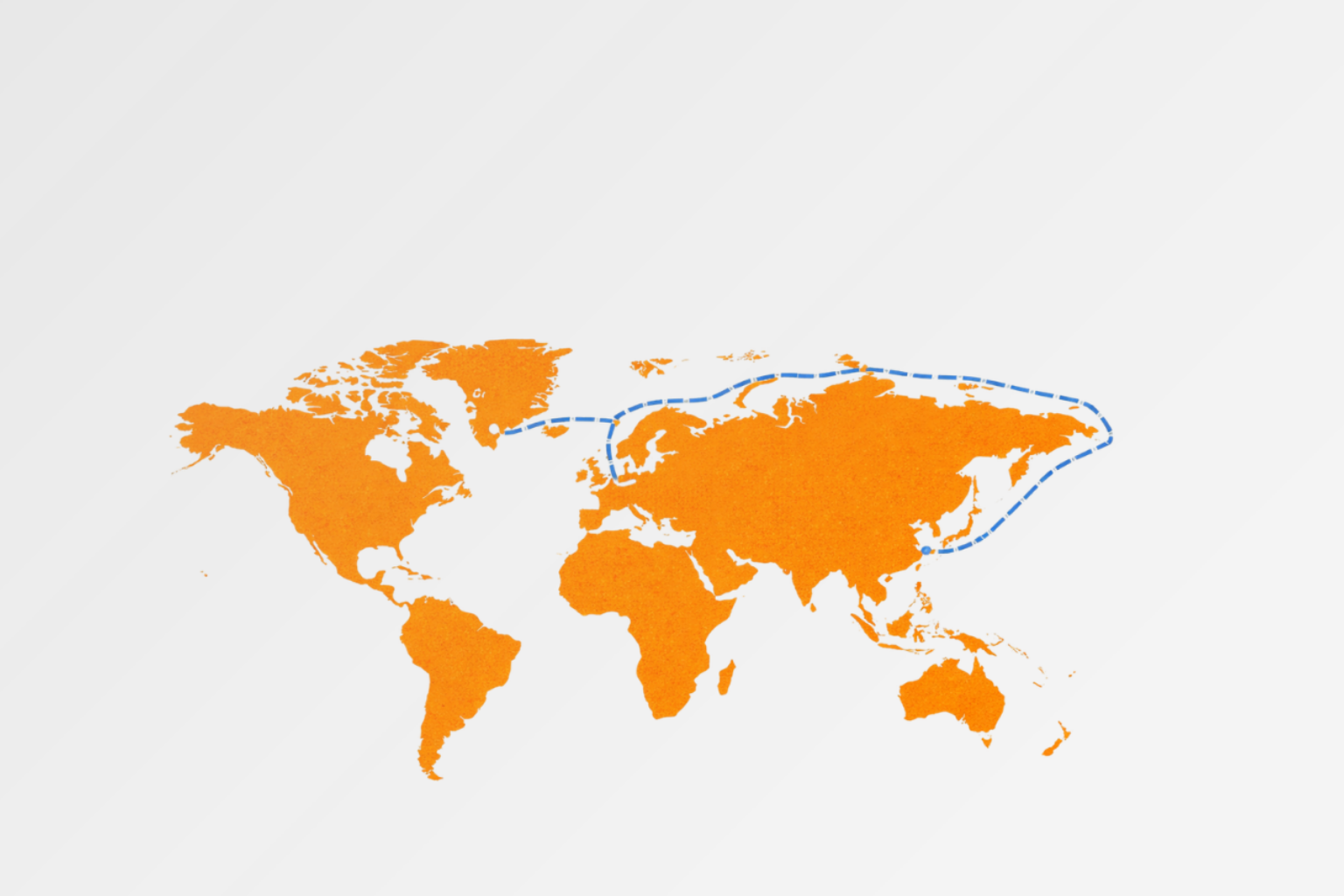
The question “Where is the Polar Silk Road?” is frequently asked. The Polar Silk Road route connects North America, East Asia, and Western Europe through the Arctic Circle. By shortening the distance between the East and the West, it enables much faster transportation. In this project, the Northern European route shortens the sea distance between Shanghai and Rotterdam. Currently, this journey takes about 45 days via the Suez Canal, but thanks to the Polar Silk Road route, it is expected to be reduced to 19 days.
In this case, global trade will be reshaped. Another aspect of the Polar Silk Road project involves meeting China’s energy needs through Russia’s oil reserves. To support this, two massive production facilities are being established. The Polar Silk Road route is not limited to maritime transportation; new railway lines are also being constructed parallel to the ports within this project.
Opportunities and Risks of the Polar Silk Road
Among the advantages of the Polar Silk Road, the most significant is the shortening of the distance between East and West. As a result, cargo ships will be able to reach their destinations more quickly, making maritime trade more attractive. This project, which has particularly attracted China’s interest, will allow Chinese products traded worldwide to be delivered much faster. However, the Polar Silk Road has not only opportunities but also risks.
Due to harsh climate conditions, there will be no permanent settlement along this route apart from those working on the project and in trade. Since railways and highways will also be used, route planning will become quite complex. New software will be needed for these calculations. Additionally, transported goods will have to be selected according to climate conditions. Nevertheless, the opening of a new route for maritime trade—the most active trade channel in the world—and the reduction of travel time by more than half is still very exciting.
Difference Between the Polar Silk Road and the Silk Road
The Silk Road is a trade route established centuries before Christ. It was named after silk because Egyptians, Romans, and Chinese traded silk along this route. It is still in use today. This route starts in China and extends to Europe via Anatolia and the Mediterranean. Over time, it has facilitated both cultural exchange and trade, and it remains active today.
The biggest difference between the Polar Silk Road and the Silk Road is the climate conditions. While settled communities formed along the Silk Road and it became a living area, this is unlikely for the Polar Silk Road. Another major difference is that the Silk Road was based on land trade, whereas the Polar Silk Road will involve maritime trade. It can be said that while one is historical and cultural, the other is primarily commercial. In essence, the Polar Silk Road can be defined as a new maritime trade route.


 Popular News
.png)