
What Is the EUR.1 Movement Certificate?
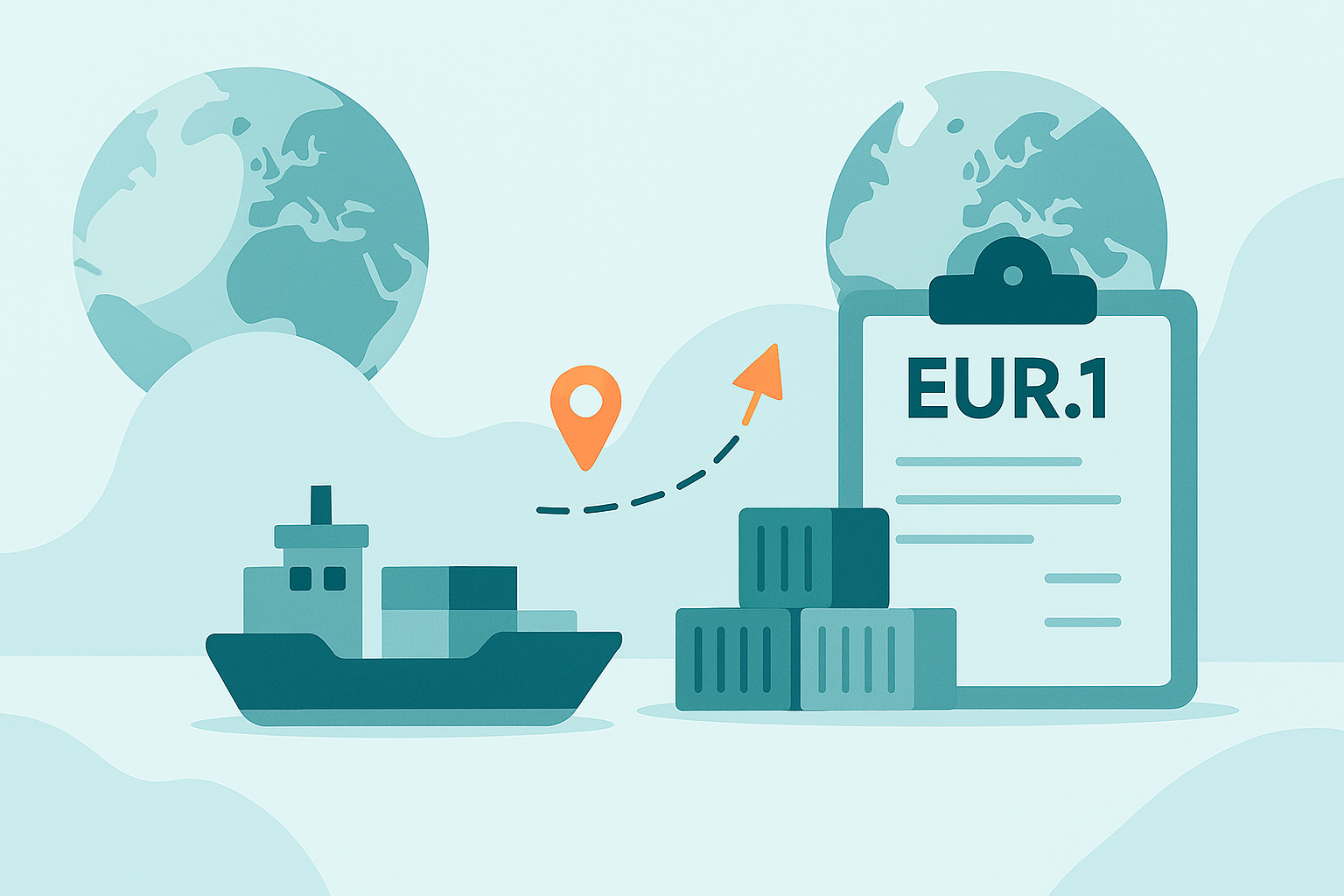
International trade continues to grow in volume worldwide day by day. Trade between countries is governed by various rules, regulations, and documents that must be prepared in compliance with legislation. One of these documents is the EUR.1 certificate. Today, many exporters wonder what this document is, why it is required, and how it should be prepared.
Many people are curious about the question, “What is the EUR.1 certificate?” First of all, it is important to note that this certificate cannot be issued for every country. It can only be issued for trade carried out with European Union countries, EFTA countries, as well as Israel, Bosnia and Herzegovina, North Macedonia, Morocco, Tunisia, Palestine, Syria, Egypt, Albania, and Moldova. In order for the certificate to be issued, the goods involved in the trade must qualify either as agricultural products or as products defined under the European Coal and Steel Community (ECSC).
The simplest answer to the question “What is the EUR.1 Movement Certificate?” is that it is a document used to prove the origin of goods or products. The EUR.1 certificate is also used in the export of iron and steel products and agricultural products covered by free trade agreements signed by Türkiye.
The EUR.1 Movement Certificate is issued by organizations authorized by the Ministry and is approved by customs administrations. When exporting goods or agricultural products that fall under the specified scope, an EUR.1 certificate must be issued.
How to Complete the EUR.1 Movement Certificate
If exports are being made to designated countries for products determined by the Ministry, an EUR.1 certificate must be issued. This document must be completed accurately to properly indicate the origin of the goods. For those wondering “What is the EUR.1 Movement Certificate and how is it filled out?”, the following steps explain the process:
- Box 1: Full registered name, address, and country of the exporter
- Box 2: Countries for which the certificate will be valid
- Box 3: Official name, address, and country of the importer
- Box 4: Country accepted as the origin of the goods
- Box 5: Country of destination
- Box 6: Transportation details
- Box 7: Section completed and stamped by the Chamber of Commerce
- Box 8: Details of the exported goods or products
- Box 9: Gross weight of the goods
- Box 10: Invoice information
- Box 11: Section reserved for the customs authority
- Box 12: Exporter’s stamp and authorized signature
Once these fields are completed, the EUR.1 certificate is considered properly issued. The most important point is that all information must be accurate and complete, which is why it is essential to understand the points that require special attention when filling out the certificate.
Points to Consider When Issuing the EUR.1 Movement Certificate
It is well known that all official documents must be completed carefully. However, certain documents require extra attention, and the EUR.1 certificate is one of them. During export procedures, the names, addresses, and details of all parties must be stated correctly and without omission. Likewise, information related to the exported goods—such as quantity, number of packages, weight, content, and transportation method—must be provided fully and accurately.
As can be understood from the explanations of “What is the EUR.1 Movement Certificate?”, obtaining the certificate alone is not sufficient. It must also be prepared accurately and completely. By doing so, exporters can carry out their trade activities smoothly and without encountering issues related to customs procedures or documentation.


 Popular News
.png)