
What is an Air Waybill (AWB)?
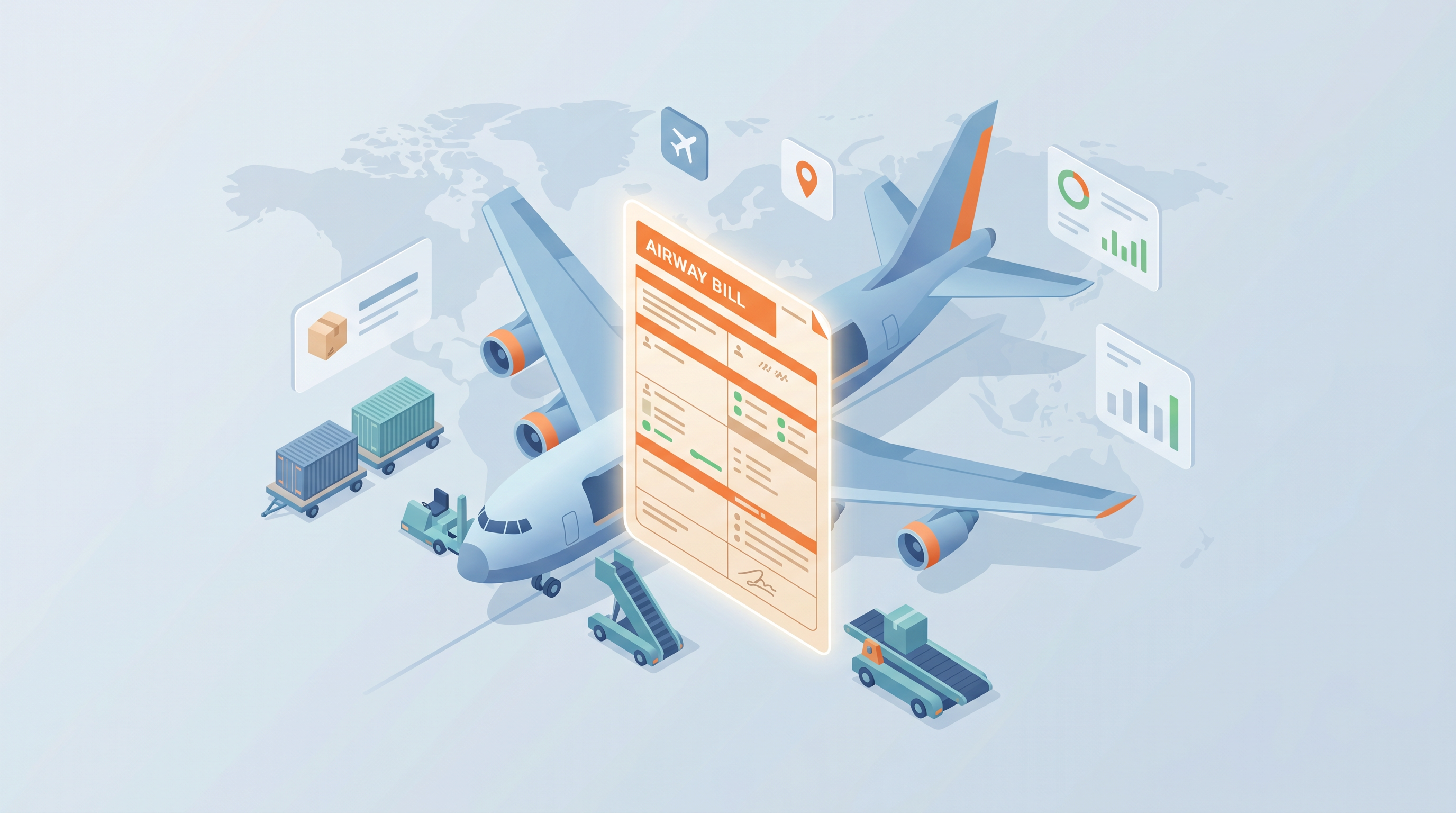
In air transportation, speed, security, and traceability become possible through proper documentation. One of the most critical documents in this process, the Air Waybill (AWB), forms the foundation of the entire operational process throughout the shipment’s transportation.
What is the Function of an Air Waybill (AWB)?
An Air Waybill (AWB) is not only an official contract between the shipper and the carrier, but it also plays a critical role in tracking cargo and managing customs procedures. The main functions of an AWB are as follows:
To document the contract of carriage
To enable shipment tracking
To serve as a reference in customs procedures
To support the standardization of operational processes
Types of Air Waybills (AWB): What Are MAWB and HAWB?
Depending on the structure of air cargo operations and whether the load is consolidated, there are two main types of AWBs:
1. Master Air Waybill (MAWB)
The Master Air Waybill (MAWB) is the primary waybill issued directly by the airline itself or by its authorized agent. It includes the official logo of the airline performing the transport and a unique three-digit airline prefix code.
Freight forwarders typically collect partial loads from different customers, consolidate them into a single large shipment, and deliver it to the airline. At this stage, the official and legal transport relationship between the airline and the logistics company is carried out through the MAWB.
On this document, the forwarder at the point of origin is listed as the shipper, while the agent that will receive the cargo at the destination is listed as the consignee. The reference number on the document is the main identification number used to track the shipment within the airline system.
2. House Air Waybill (HAWB)
The House Air Waybill (HAWB) is an intermediary waybill issued by the freight forwarder for the actual owners of the cargo. This document bears the logo and letterhead of the logistics company rather than the airline.
The HAWB defines the commercial and legal relationship between the logistics company and the actual exporter and importer. Therefore, the real seller appears in the shipper section, and the real buyer appears in the consignee section.
The HAWB includes both the intermediary number created by the logistics company for its own tracking and the main MAWB number to which the shipment is linked. In this way, each sub-shipment within a consolidated load is associated with the main transport document within the airline system.
What is the Difference Between an Air Waybill (AWB), Sea Waybill (SWB), and Bill of Lading (B/L)?
The three most commonly used transport documents in global trade are the Air Waybill (AWB), Sea Waybill (SWB), and Bill of Lading (B/L). Although at first glance all three appear to be receipts indicating that the cargo has been received, their legal characteristics, ownership rights, and roles in financial processes are completely different.
For example, while the AWB is used only in air cargo transportation, the SWB is preferred in maritime transport but does not provide transfer of ownership. In contrast, the B/L is used in maritime transport and is also a valuable document representing ownership of the goods. This feature distinguishes the B/L from the other documents in terms of ownership transfer and financial transactions.
AWB, SWB, and B/L Comparison
The differences between AWB, SWB, and B/L can be summarized as follows:
Feature | Air Waybill (AWB) | Sea Waybill (SWB) | Bill of Lading (B/L) |
|---|---|---|---|
Mode of Transport | Air | Sea | Sea |
Issuer | Airline (MAWB), Freight Forwarder (HAWB) | Carrier | Carrier |
Time of Issuance | After cargo acceptance | Before loading | Before or after loading |
Main Functions | Receipt, contract, tracking | Receipt, contract, tracking | Receipt, contract, tracking, and transfer of ownership |
Negotiable Instrument | No | No | Yes |
What is an IATA AWB Number?
Air waybills (AWBs) are created according to a standardized numbering system established by the International Air Transport Association (IATA). This structure ensures that each shipment is uniquely identified on a global scale.
A standard AWB number consists of two main parts:
3-digit airline code: Indicates the carrier issuing the AWB
8-digit serial number: A unique reference number for the specific shipment
This numbering structure enables the shipment to be tracked throughout the entire transportation process. Even if different systems or carriers are used, the standard AWB format allows the shipment’s location and status to be monitored accurately.
What Are AWB Color Codes?
Printed air waybills consist of copies in different colors to represent various stakeholders involved in the process:
Color | Owner | Function |
|---|---|---|
Green | Issuing Carrier (Airline) | The original copy used for the airline’s accounting, records, and archiving processes |
Blue | Shipper | The original copy given to the shipper as proof that the airline has received the cargo |
Pink | Consignee | Travels with the shipment to the destination airport and is given to the consignee at delivery |
Yellow | Delivering Agent / Carrier | The delivery receipt copy signed by the consignee confirming that the goods were received undamaged; retained by the agent |
White | Agents, Customs, Transit Points | Other copies used for operational, customs backup, and insurance processes |
Today, in line with IATA standards, paper copies such as green, blue, and pink are increasingly being replaced by digital e-AWB (Electronic Air Waybill). This practice, encouraged by IATA, aims to reduce paper waste and minimize operational errors.
How to Fill Out an Air Waybill (AWB)?
Proper preparation of an Air Waybill (AWB) plays a critical role, especially in ensuring that customs processes proceed smoothly. An incomplete or incorrectly filled AWB may lead to delays and additional costs.
The main information that must be included on a standard AWB is as follows:
Shipper and consignee details
Cargo information
Package details
Origin and destination points
Carrier information
Special handling instructions
Tax and charges status
What Happens If an Air Waybill (AWB) Is Filled Incorrectly?
Errors in an AWB can cause serious problems in air cargo operations:
Rejection of the cargo by the airline
Delays and waiting at customs
Incorrect delivery
Additional costs and penalties
Especially incorrect product descriptions or incomplete declarations may lead to violations of security and regulations.
To manage your air cargo transportation processes entirely digitally and to track your shipments end-to-end, you can benefit from the logistics solutions offered by Shipeedy.com.


 Popular News

.png)
 .png)