
European Intermodal Terminals
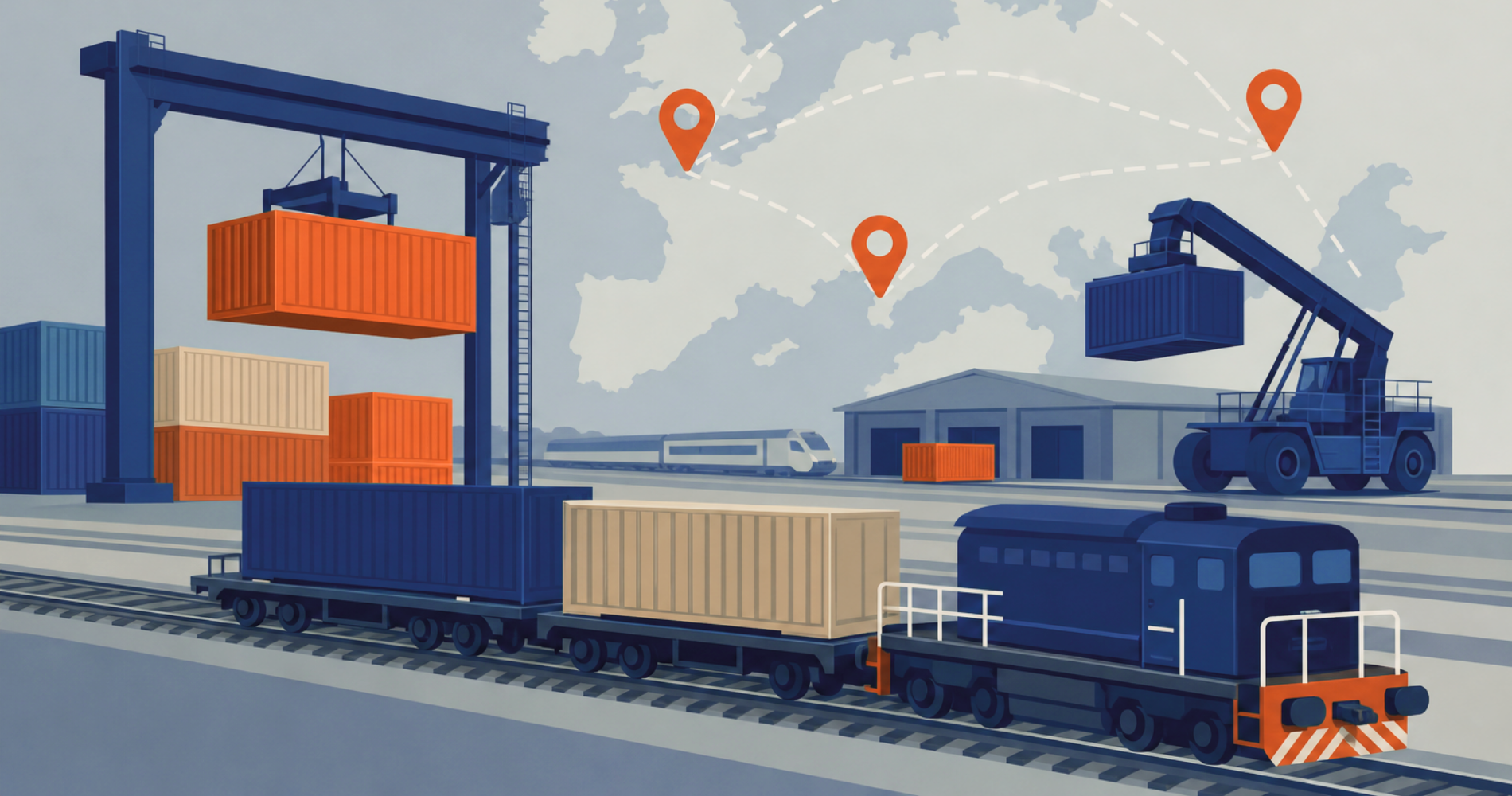
Europe has a highly developed logistics infrastructure integrating railways, highways, maritime transport, and inland waterways. Within this structure, intermodal rail terminals stand out as some of the most critical hubs for managing cargo flows.
Across the continent, these terminals are generally positioned in the hinterlands of major seaports or at the intersections of key trade corridors. These “mega hubs” create Europe’s strength in alternative logistics routes by enabling fast and efficient transitions between different transport modes.
Europe’s most important intermodal rail terminals are listed below according to their geographical regions and logistics roles.
Germany (Central Europe and North Sea Connections)
Germany possesses one of Europe’s largest intermodal networks and hosts some of the continent’s biggest inland transshipment terminals.
Duisburg (Duisport): The world’s and Europe’s largest inland port terminal. As a leader in rail-river-road integration, this hub is also one of the main European destinations for intermodal block trains departing from Türkiye.
Hamburg Port Railway: Europe’s largest railway port system. The terminal handles hundreds of trains and thousands of wagons every day, distributing containers arriving at the port across Europe.
Ludwigshafen (Kombiverkehr): Ludwigshafen terminal is one of the key intermodal points of chemical logistics and the Rhine corridor, serving as one of the busiest inland terminals connecting road and rail transport.
Dortmund (CTD): A strategic railway freight consolidation center located in the heart of the Ruhr region.
Netherlands and Belgium (Benelux Region)
Rotterdam (RSC – Rail Service Center): A massive intermodal hub connecting Europe’s largest seaport, Rotterdam, to continental rail networks. Dozens of block trains depart daily from here to inland Europe.
Antwerp (Combinant NV / Muizen): One of Belgium’s largest intermodal rail terminal areas, playing a critical role especially in petrochemical corridor logistics.
Liège Logistics Intermodal: A modern inland container terminal located near Liège Airport, integrating air, road, and rail transportation.
Italy (Mediterranean and Southern Europe Corridor)
Trieste (EMT Terminal / Fernetti): One of the most critical transshipment points on the Türkiye–Europe logistics corridor, where trailers and containers arriving via Ro-Ro vessels from Türkiye are loaded onto block trains heading into Europe (Germany, Austria, etc.).
Milan (Busto Arsizio-Gallarate): Operated by Hupac, this is Italy’s largest intermodal terminal connecting the country to Northern Europe through the Alps.
Poland and Eastern Europe
Kutno (PCC Intermodal): The largest intermodal terminal in central Poland. Serving the Warsaw and Łódź regions, it acts as a consolidation center for East-West (China-Europe) and North-South corridors.
Gliwice and Brzeg Dolny (PCC): Modern transshipment facilities connecting Poland’s industrial southern regions with Baltic ports such as Gdańsk and Gdynia.
Budapest BILK (Hungary): Operated by Rail Cargo Group, it is one of the most strategic logistics hubs managing rail freight traffic between Central Europe, the Balkans, and Türkiye.
Curtici – Railport Arad (Romania): One of Central and Eastern Europe’s largest and most modern railway terminals, providing customs and handling services for cargo moving toward Western Europe.
China–Europe Rail Network (Middle Corridor)
The China–Europe rail network is an integrated logistics system that enables cargo transportation from Asia to Europe by rail.
Particularly along the Middle Corridor, trains depart from China and travel through Central Asia to Türkiye via railway networks.
From Türkiye, cargo continues to Europe through the Baku–Tbilisi–Kars railway line. During the European distribution phase, cargo is directed to different terminals by rail, road, or when necessary, maritime transport. This structure stands out as one of the clearest examples of intermodal transportation.
Türkiye’s Europe-Connected Intermodal Terminals
Intermodal transportation operations in Türkiye are also directly integrated into this European network.
Halkalı Railway Terminal (Istanbul): The main hub for Türkiye’s Europe-bound rail traffic. Regular weekly block trains depart from here to major European terminals such as Duisburg and Vienna.
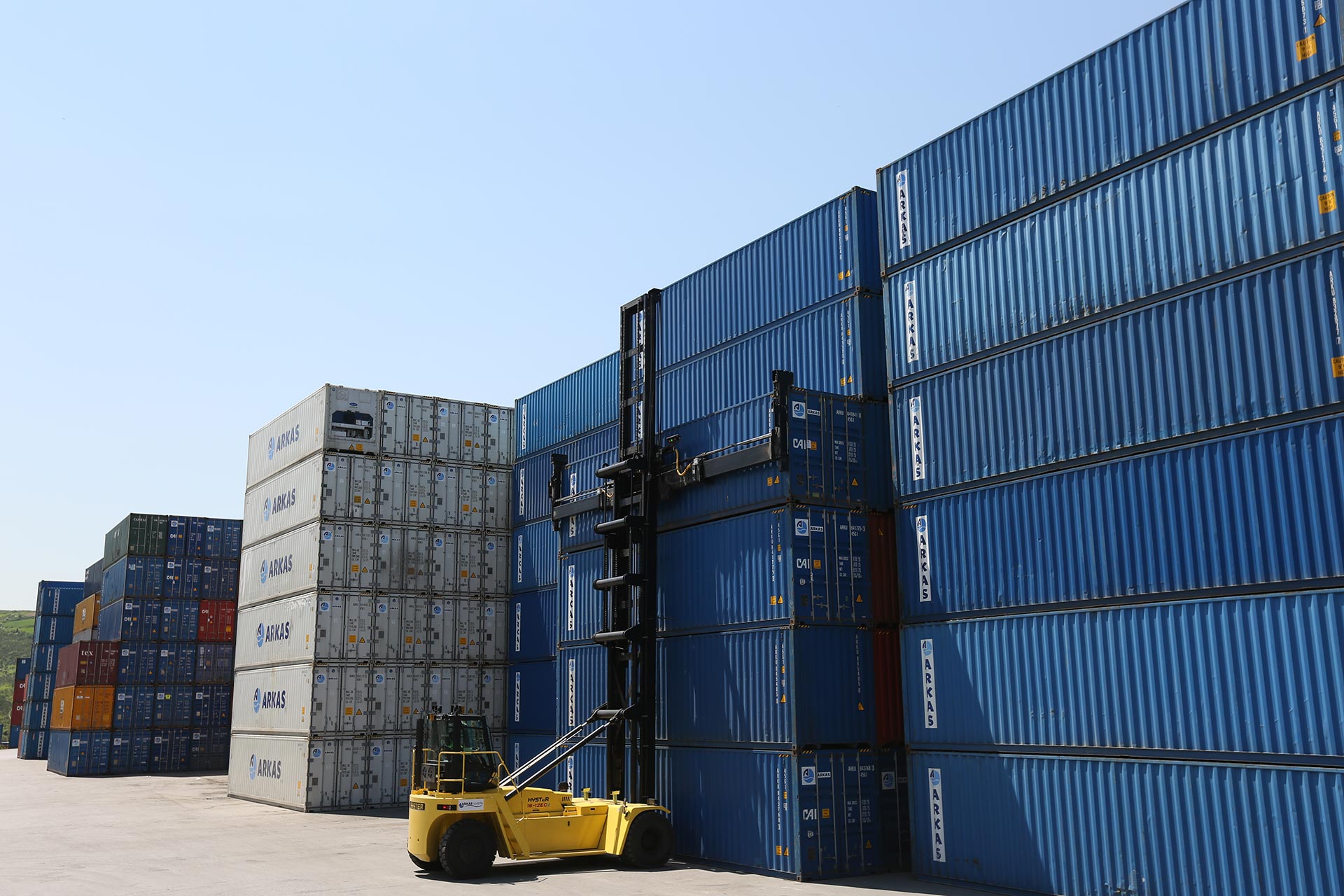
Kartepe Railport (Kocaeli): Owned by Arkas Holding, Railport is one of Türkiye’s newest and most modern private intermodal terminals. Through the Marmaray connection, it sends uninterrupted export trains to Duisport facilities in Europe.
The Role of Intermodal Terminals in Logistics
Intermodal rail terminals are not only cargo transfer points but also strategic centers where supply chains are optimized.
These hubs enable:
- integration of different transport modes
- cost and transit time advantages
- support for sustainable transportation
As demand for rail freight transport increases under the European Green Deal, these terminals have become some of the most important elements shaping the future of logistics.
Intermodal rail terminals in Europe stand out as critical infrastructures enabling global trade to move faster, more efficiently, and more sustainably.
Türkiye’s integration into this network and its capacity expansion through investments such as Railport further strengthen the country’s strategic position in logistics.
In the future, logistics competitiveness will be determined not only by capacity, but also by the ability to build integrated systems, alternative logistics routes, and multimodal infrastructure.


 Popular News

.png)