
What Is a Sea Waybill?
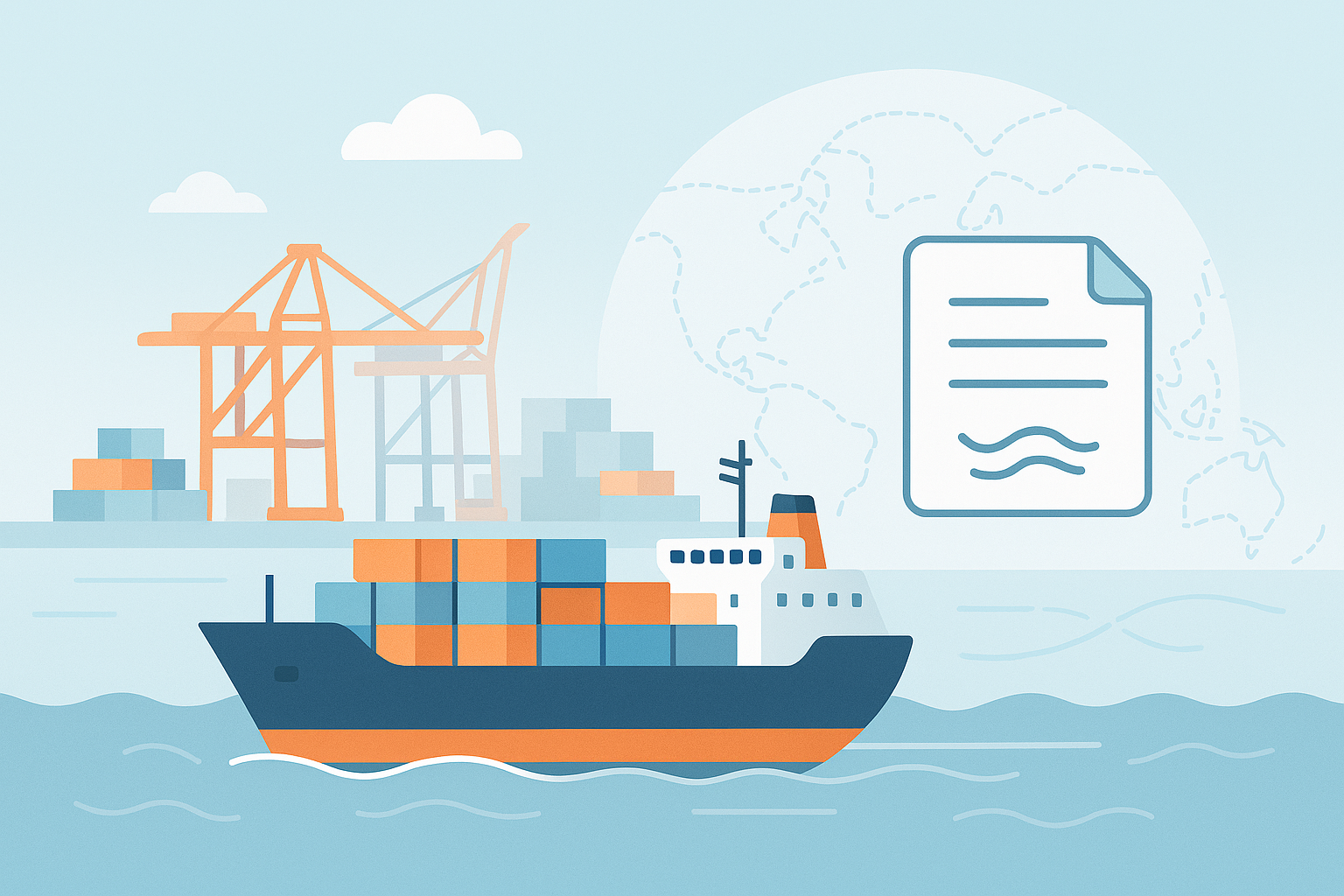
For a logistics process to progress smoothly, it is essential that the relevant documents are prepared correctly and completely. The Sea Waybill used in maritime transportation is also referred to as a transport document. By confirming that the goods to be transported have been received, the Sea Waybill helps protect the rights of all parties involved in the transportation process. This document is crucial for ensuring a high-level logistics operation and reliable transportation.
The Sea Waybill is structured around the shipper, the consignee, and the carrier, while clearly defining the responsibilities of each party. In essence, this document serves as proof of an operating logistics process.
What Are the Features of a Sea Waybill?
In trade, the process from when a product leaves the sender until it reaches the buyer is critical for both parties. The quality of this process is heavily influenced by the freight forwarder and the carrier or its appointed agent. Ensuring that goods collected from the shipper are delivered to the discharge port accurately and without damage means the transportation process has proceeded smoothly. During this process, the carrier is required to prepare certain documents.
As each mode of transportation has its own specific documentation, maritime transportation also involves distinct procedures and documents. One of the most important documents in maritime transportation is the Sea Waybill.
This document can be issued depending on various circumstances. One of the most important aspects of logistics operations is the commercial relationship built between the parties. Depending on this relationship, certain options may be applied when necessary. As the shipper, do you trust that you will receive payment without any issues? How solid are your payment agreements and reconciliation processes? The answers to these questions determine whether a Sea Waybill can be used.
In summary, a Sea Waybill is preferred when there is no financial risk between the seller and the buyer. The agreed payment method between the parties is also of critical importance. For example, under advance payment terms, the buyer places an order and makes payment upfront. In such cases, since there is no risk related to payment, the bill of lading can comfortably be issued as a Sea Waybill.
Why Was the Sea Waybill Introduced?
Handling transportation processes quickly and efficiently within the supply chain provides significant advantages in terms of both time and cost. The Sea Waybill, also known as an Express Bill of Lading, is a type of document issued by the carrier. It is prepared either by a representative of the carrier or by an authorized agent acting on the carrier’s behalf.
This document only confirms that goods have been transported. When container vessels arrive at the discharge port, delivery through an agent is not necessarily required. The Sea Waybill emerged as a response to an important operational need.
Compared to other modes of transport, maritime transportation is relatively more practical. Issues such as traffic congestion or accidents that commonly cause delays in road transport do not apply. Container vessels, which are widely used in maritime transport, provide efficient transit. However, the physical delivery of documents to the loading and discharge ports may take longer.
Each additional day a vessel remains at the port without unloading its cargo results in delays and extra costs. Furthermore, for every day a container vessel waits without completing loading or unloading operations, a charge known as demurrage must be paid to the vessel owner. To prevent such additional costs and delays and to enable the supply chain to operate efficiently, the Sea Waybill is used.
Thanks to this document, goods can be released immediately upon arrival. Once the consignee’s identity is verified, the cargo can be delivered, allowing the vessel to depart the port without waiting for original documents.
Differences Between an Original Bill of Lading and a Sea Waybill
One of the essential documents required for cargo transportation is the Original Bill of Lading. In maritime transportation, a bill of lading is a transport document that identifies the ownership of goods. When a shipment is arranged with a carrier, the shipper must have a bill of lading issued. This document specifies the goods transported by the vessel and their condition.
It also enables the consignee to receive the cargo smoothly at the discharge port. As it represents ownership of the goods, it is legally recognized by banks. The information required on an original bill of lading includes:
- The shipping company (shipper)
- The carrier responsible for transportation
- Consignee (buyer) details
- Notify party information
In addition, the bill of lading helps establish trust between parties and supports the continuity of the commercial relationship. Delivering the original bill of lading to the consignee is the responsibility of the seller. According to standard practice, original bills of lading must be issued as three originals and three copies.
The Sea Waybill, also referred to as a maritime waybill, does not represent ownership. Furthermore, once the cargo arrives at the port, there is no need to present a printed original document. Through the digitally issued Sea Waybill, prepared electronically alongside other commercial documents, the consignee can easily collect the cargo from the port.
This provides significant convenience to the logistics process. Sea Waybills are commonly used for short transit routes, transit shipments, or situations where the original bill of lading may not arrive at the discharge port before the cargo. To avoid delays and complications, the exporter may request the carrier to issue a Sea Waybill.
As a result, when the vessel arrives at the port, the cargo can be delivered to the consignee using the Sea Waybill without requiring an original bill of lading.


 Popular News
.png)