
What Are the Most Important Container Ports in the World?
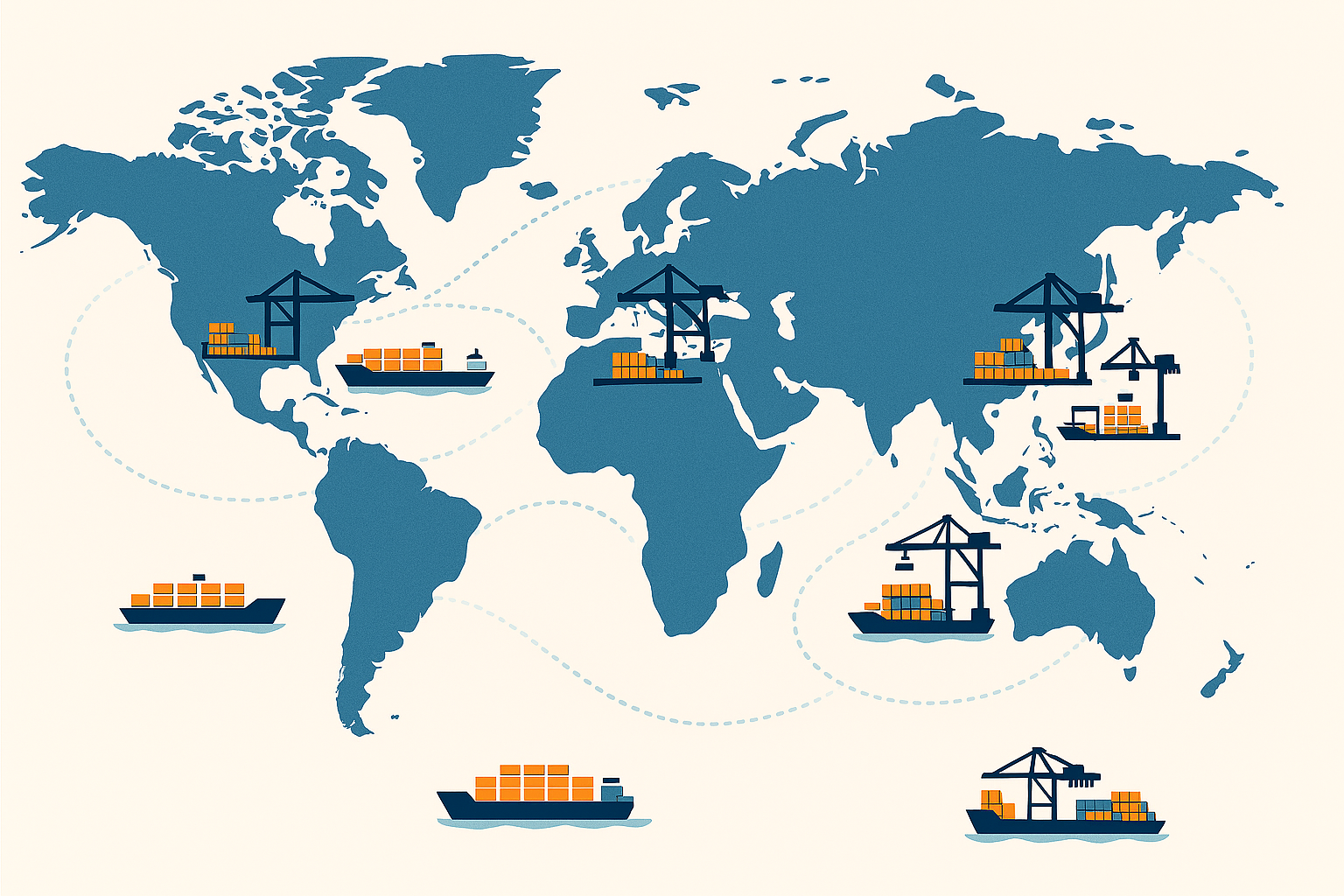
Global trade plays a vital role in the world economy. Therefore, it is crucial to eliminate any obstacles that may hinder trade while also providing facilities that make trade more secure and efficient. In this context, one of the most important infrastructures supporting global trade is container ports. For this reason, container port regions are frequently preferred due to their unique characteristics and strategic locations.
Container ports are essential for ensuring that global trade operates smoothly. Ports are the locations where goods are delivered and received, making them critical for the continuity of trade activities. This is why ports need to be large-scale, comprehensive, and geographically advantageous. Thanks to these features, container vessels can use these ports to complete trade operations more quickly and efficiently.
Given the importance of ports, it is natural that the world’s most significant ports and their characteristics attract attention. While there are many ports around the world, some are considered more important than others. This distinction is largely based on geographic location, operational capacity, and additional strategic factors.
China – Port of Shanghai
The Port of Shanghai in China, one of the largest ports in the world, handled approximately 43 million TEUs in 2019. Through this activity, it managed nearly 20 percent of global trade volume. Located in China’s economic center, the Port of Shanghai is not only the largest container port in the world but also the busiest. The port’s throughput alone exceeds that of many other major ports combined.
Singapore – Port of Singapore
Another port with a significant role in global trade is the Port of Singapore. This region accounts for nearly 10 percent of global trade, making it a major hub for international commerce. Serving as a key maritime center between Asia and the Pacific, the port handles approximately 37 million TEUs annually. After Shanghai, it is considered the second busiest port in the world.
South Korea – Port of Busan
Busan Port, the largest and most important port in South Korea, has an annual handling volume of approximately 21 million TEUs. Recognized as a major maritime hub in the region, the port accommodates more than 7,000 container vessel calls annually, highlighting its significant contribution to global trade.
United Arab Emirates – Port of Dubai
The Port of Dubai is the largest port in the Middle East, handling approximately 15 million TEUs per year. Due to its strategic location and large-scale infrastructure, it is considered one of the most important ports in the region. The port plays a vital role in maintaining uninterrupted trade flows within the Middle East and continues to retain its importance today.
China – Port of Qingdao
Located in northeastern China, the Port of Qingdao has an annual handling capacity of approximately 19 million TEUs. As one of the strategic ports in the Asia-Pacific region, it facilitates more than 2,000 container vessel voyages per year, reinforcing its role as a key trade gateway.
Netherlands – Port of Rotterdam
The Port of Rotterdam, located in the Netherlands, is the largest port in Europe. With more than 30,000 vessel calls annually, it occupies a central position in European trade. Its advanced infrastructure and connectivity make it a critical hub for both continental and global commerce.
Malaysia – Port of Tanjung Pelepas
Situated in the Johor region of Malaysia, the Port of Tanjung Pelepas is of great importance both regionally and nationally. With an annual handling volume exceeding 9 million TEUs, it is regarded as a major maritime center. It is estimated that more than 4,000 container vessel calls are handled annually.
China – Port of Hong Kong
China, one of the countries with the highest number of major ports, also includes the Port of Hong Kong among the world’s most important ports. Located in southeastern China, the port handles more than 18 million TEUs annually. As a vital maritime hub, it accommodates over 7,000 container vessel transits each year.
Malaysia – Port of Klang
Port Klang, the largest port in Malaysia, has an annual handling volume exceeding 14 million TEUs. With more than 10,000 operational movements annually, Port Klang continues to play a significant role in contemporary trade activities.
Although there are many ports around the world, these ports—recognized as the most important—play a crucial role in modern global trade. They are essential for ensuring that the operations of both countries and companies proceed accurately and on time. Despite the large number of ports worldwide, those that have consistently stood out due to their size and throughput continue to maintain an active and strategic role.
While China dominates the list with multiple major ports, every country has its own strategically important ports. The reason these ports rank among the world’s most significant is largely due to their role as common transit or destination points for international shipping routes. Given their steadily increasing cargo volumes, these ports are expected to remain among the largest and most important in the world in the years ahead.


 Popular News

.png)