
What Are Dangerous Goods and Flammable Substance Labels?
Many types of goods are transported internationally in logistics. It is essential that the goods handled in transportation comply with international procedures and are transported appropriately. For this reason, dangerous goods and flammable substance labels are highly important in international transportation. Identifying and using these labels correctly is a critical requirement for the safe transport of hazardous materials.
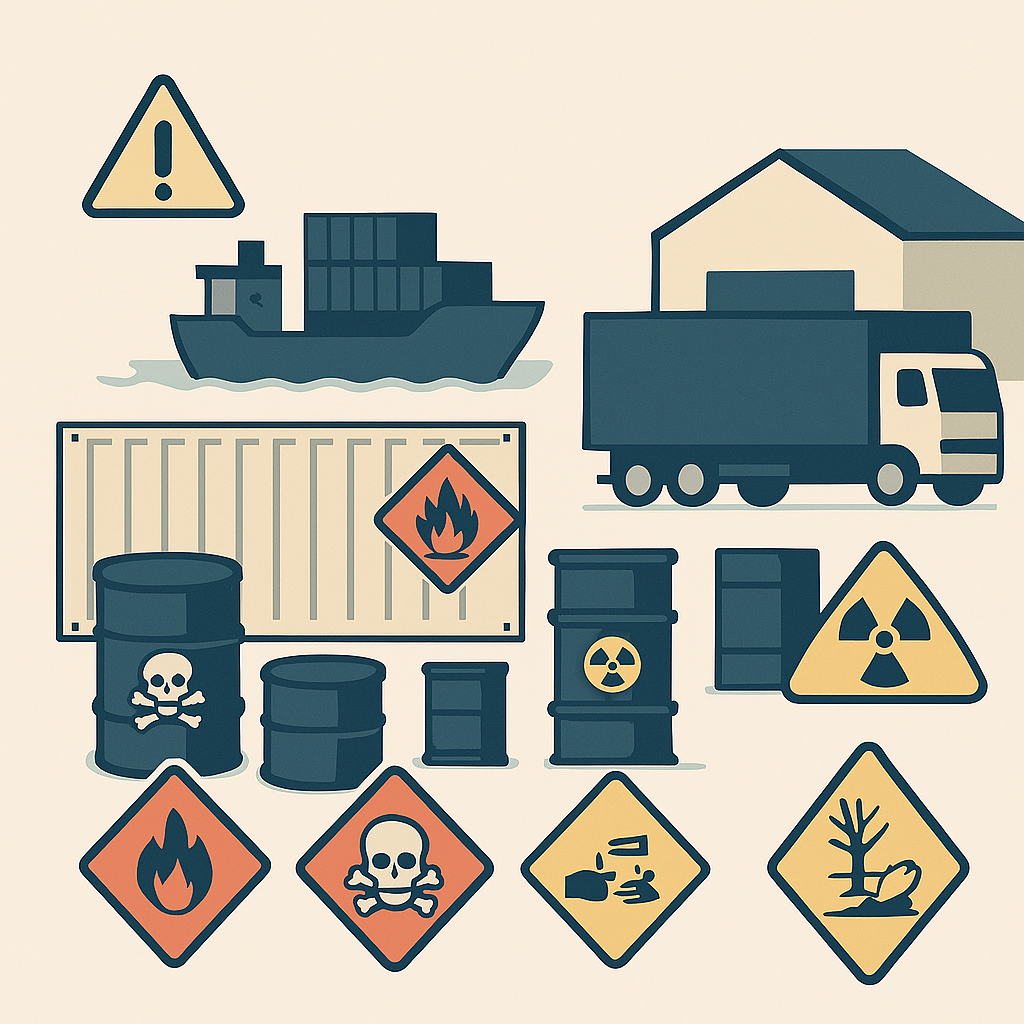
Warning labels used to indicate dangerous goods play a vital role in risk management. Thanks to these labels, it becomes easier to take precautions and to manage transportation processes in a safer and more controlled manner. Dangerous goods and flammable substance symbols can be listed as follows:
- E: Explosive
- O: Oxidizing
- F: Flammable
- F+: Extremely flammable
- T: Toxic
- T+: Very toxic
- C: Corrosive
- Xn: Harmful
- Xi: Irritant
- Xİ: Sensitizing
Globally Harmonized System (GHS) labels include:
- GHS 01: Explosive
- GHS 02: Flammable
- GHS 03: Oxidizing
- GHS 04: Gases under pressure
- GHS 05: Corrosive
- GHS 06: Toxic
- GHS 07: Irritant
- GHS 08: Hazardous to health
- GHS 09: Hazardous to the environment
By defining dangerous goods labels in this way, the risks become easier to understand and appropriate safety measures can be applied accordingly. Dangerous, flammable, and chemical substances are widely used around the world in various industries and quantities, making them extremely important in international trade. Ensuring safe transport and compliance with procedures is a highly sensitive matter, especially in maritime transportation, which is one of the most frequently used modes for such goods.
Classification of Dangerous Goods
In international trade, it is essential to comply with established regulations and standards for the transportation of dangerous goods. Both hazard level and flammability are key factors in classification. Just as symbols are important, dangerous goods classes are also critical for safe and careful transportation. These classes and their meanings are as follows:
- Class 1: Explosive substances
- Class 2.1: Gases
- Class 2.2: Toxic gases
- Class 3: Flammable liquids
- Class 4.1: Flammable solids
- Class 4.2: Substances liable to spontaneous combustion
- Class 4.3: Substances that emit flammable gases upon contact with water
- Class 5.1: Oxidizing substances
- Class 5.2: Organic peroxides
- Class 6.1: Toxic substances
- Class 6.2: Infectious substances
- Class 7: Radioactive materials
- Class 8: Corrosive substances
- Class 9: Miscellaneous dangerous substances and articles
Learning all these classifications individually can be time-consuming and challenging. As a result, in the 1960s, the International Maritime Organization grouped these substances into standardized cargo codes. According to international standards, labels used on transport units must be at least 10 × 10 cm in size. These materials pose nine major hazard categories and are classified based on internationally recognized labeling systems to ensure safety of life and property.
Storage of Dangerous Goods
The storage and stacking of dangerous goods is a highly critical phase that requires strict attention. First, an up-to-date inventory of all hazardous chemicals must be prepared. All substances in solid, liquid, and gaseous form, including flammable and hazardous materials, must be correctly categorized.
The presence of warning labels such as flammable substance symbols is mandatory. All procedures related to storage, filling, usage, sale, or production of dangerous goods must be strictly followed. Failure to comply may result in severe penalties and sanctions. Environmentally hazardous substances are also subject to specific storage regulations. Some of these rules include:
- Dangerous goods stored in public areas must comply with established safety standards.
- Explosive materials must be stored in single-story facilities with fire resistance of at least 120 minutes.
- All hazardous materials must display warning labels to ensure environmental and public safety.
- Access roads must remain open, and parking along these routes must be prohibited.
- Buildings must not contain barred windows or cage-like structures.
The handling, storage, and transportation of dangerous goods are extremely important due to the potential risks to human life and the environment. While transportation poses risks, improper storage can be equally dangerous. Therefore, storage areas must be given the same level of importance as transportation and production processes.
Dangerous and Chemical Goods in Maritime Transportation
There are numerous procedures and regulations governing substances marked with oxidizing, flammable, or dangerous goods labels that are commonly transported internationally. Maritime transportation allows for the movement of petroleum and petroleum-based products, waste materials, volatile and flammable gases, radioactive substances, and similar goods. However, each of these requires specific transportation documents and certifications.
Failure to comply with required documentation and procedures may cause shipments to be halted at ports or customs checkpoints. Maritime transportation is one of the most widely used methods in international trade, and it frequently involves the transport of dangerous, flammable, and chemical substances.
Adhering to proper procedures, transportation methods, loading techniques, storage practices, and regulatory compliance is crucial. Non-compliance not only leads to legal penalties but also poses serious risks to human life, the environment, and other living beings. For this reason, strict adherence to regulations and best practices in maritime transportation is essential when handling hazardous materials.


 Popular News

.png)