
Railway Transportation Trends for 2026: What Lies Ahead for the Industry?
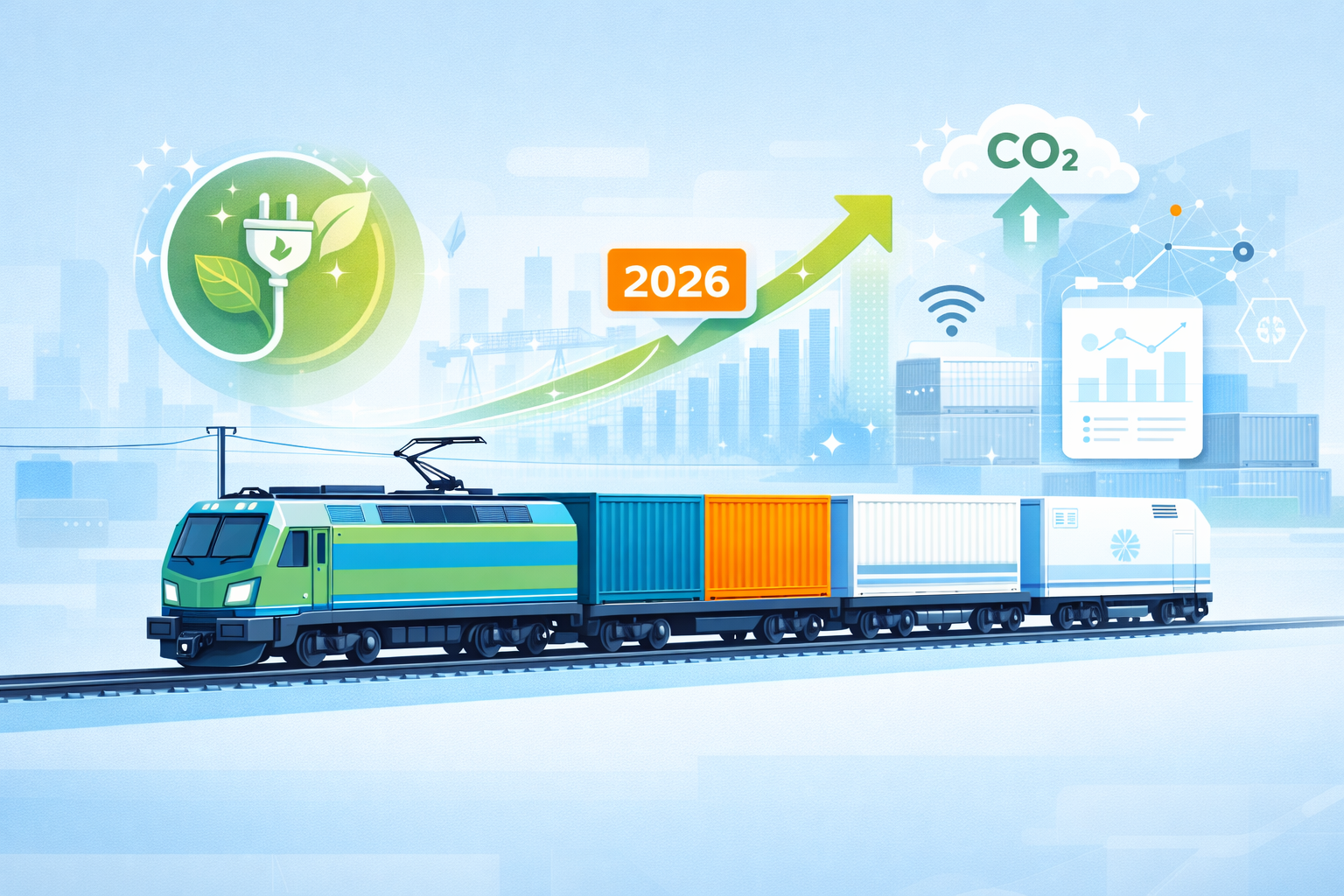
Many innovations are expected in railway transportation related to logistics activities. Due to its high carrying capacity, railway transport is considered one of the safest transportation methods and offers numerous advantages thanks to its independence from traffic congestion. Especially in the transportation of long-distance foreign trade cargo, railway transportation plays a major role by providing practical solutions that ensure uninterrupted product supply.
The railway initiatives expected to expand logistics activities on a sectoral level can be listed as follows:
- Increasing infrastructure investments and expanding railway networks through modernization
- Focusing on vocational training programs to eliminate the shortage of qualified personnel
- Developing transit transportation models to strengthen the infrastructure of logistics operations
- Increasing transportation capacity by raising quotas for transit permits
- Establishing international standards for cross-border transportation activities
- Aligning international transportation regulations with the sector in accordance with freight forwarding legislation
- Creating incentive programs to support European Green Deal initiatives
- Simplifying application processes for the Green Logistics Certificate
- Developing e-commerce to increase logistics activities and implementing tax regulations that best support this growth
- Enhancing customs and transportation infrastructure systems and enabling E-Document (EGBT) processes
Green and Sustainable Transportation
With 2024, it is evident that sustainability-focused measures for railway transportation can significantly increase sectoral efficiency. While accelerating logistics and transportation operations, these developments are also expected to strengthen competitiveness. Logistics activities aligned with internationally recognized standards make valuable contributions to the national economy. Therefore, initiatives focused on railway transportation trends are of great importance.
Within the scope of logistics activities, efforts will be initiated to improve railway transportation infrastructure in order to implement environmentally compatible transportation and distribution systems. These efforts aim to reduce packaging waste, ensure the disposal of hazardous and solid waste, provide noise control, and minimize emissions and energy consumption.
Digitalization and Smart Technologies
To maintain logistics operations in a faster and more professional manner, technological innovation is essential. In this context, digitalization efforts in railway transportation have already begun. Information regarding transported goods—such as data, tracking, and scheduling—will become easily accessible through smart technologies.
As digitalization expands worldwide, professional and efficient logistics processes are becoming increasingly achievable. Railway transportation, which encompasses significant sectoral advancements, stands out as one of the modes most capable of effectively utilizing these technologies.
Digital railway transportation highlights environmentally friendly logistics solutions by reducing carbon footprints. It also prevents manufacturers from using unnecessary materials, enabling products to be transported and consumed with minimized packaging. This approach lowers costs and has become an integral part of digitalization and smart technology applications.
Infrastructure and Logistics Integration
Logistics integration refers to the operational processes that enable the transportation of orders from one point to another. Railway transportation is widely used worldwide in this regard. Its large capacity makes it especially suitable for transporting heavy and bulk commodities such as iron, steel, and minerals, although it continues to require sector-specific innovations.
The railway transportation trends projected for 2026 represent the most efficient solutions for sustainable logistics activities. All aspects of these trends have been thoroughly defined, and implementation efforts have already begun.
The initiated infrastructure projects aim to align with green transformation objectives while enabling more efficient and environmentally responsible logistics operations. Countries adopting smart technologies in railway transportation contribute to macroeconomic growth through advanced logistics practices. These investments also promote diversification within the national economy and facilitate maximum profitability. In this respect, it can be stated that critical initiatives are being carefully evaluated and implemented under optimal conditions.


 Popular News

.png)