
Rail Freight Wagon Types and Their Areas of Use
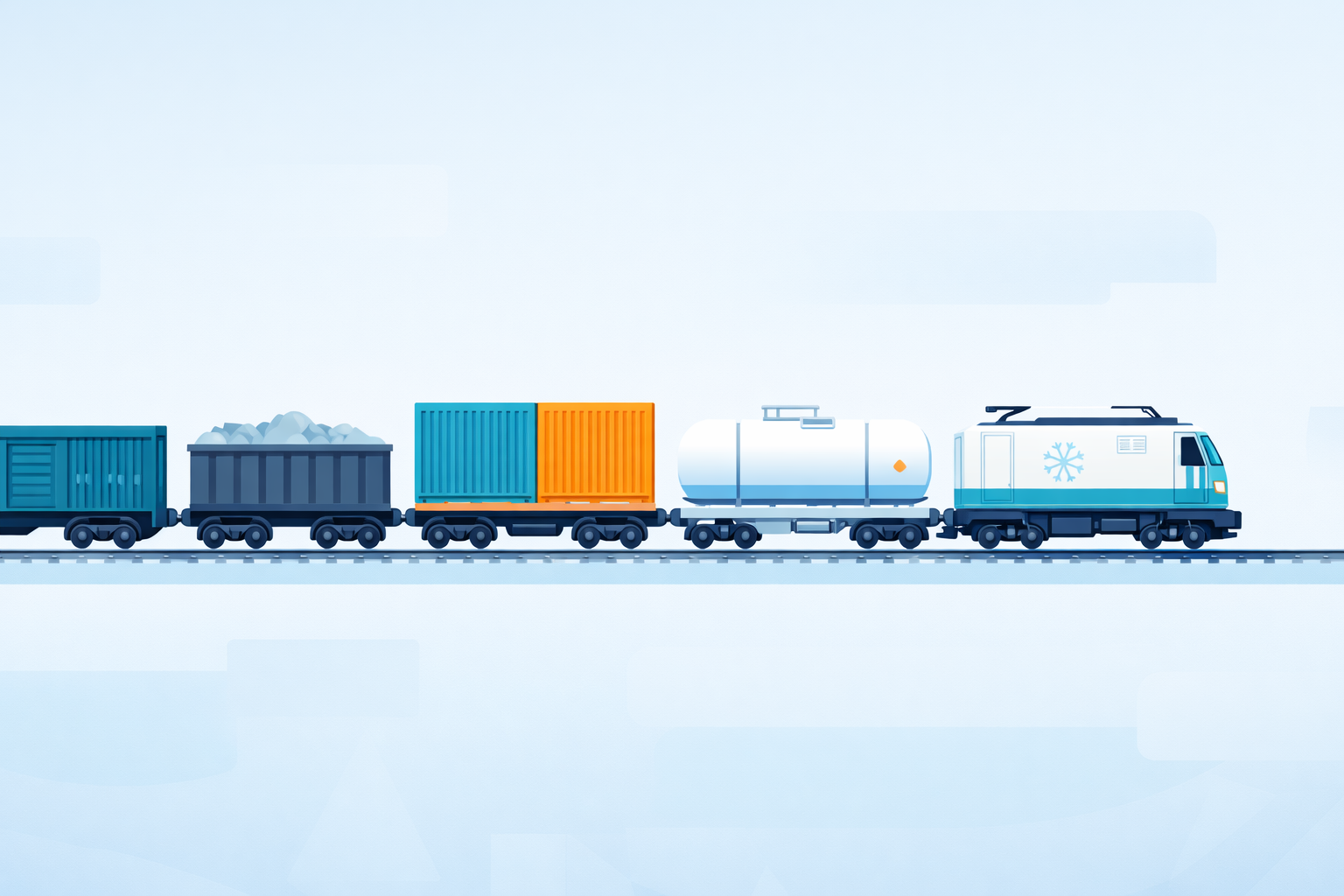
Rail transport is one of the most important logistics solutions that enables high‑volume cargo to be transported safely and economically over long distances. The efficiency of this system depends on selecting the right type of wagon. Each cargo type is transported with wagons that have different technical specifications, and this choice directly affects cost, speed, safety, and operational efficiency.
In this article, you can explore the main wagon types used in rail transportation and the types of cargo they are preferred for.
Why Is Wagon Selection Important in Rail Transport?
Wagon selection determines not only how cargo is transported but also the overall success of the operation. Incorrect wagon choice can lead to cargo damage, delays, and additional costs.
With proper wagon selection:
- Cargo safety is enhanced
- Transport capacity is optimized
- Operational costs are reduced
- Loading and unloading processes become faster
Therefore, the physical characteristics of the product to be transported (weight, volume, sensitivity, liquid/solid form, etc.) must always be taken into consideration.
Boxcars (Closed Wagons)
Boxcars are one of the most commonly used wagon types thanks to their structure that provides protection against external factors.
Common uses:
- Palletized products
- Textile products
- Electronic goods
- Packaged food
These wagons are ideal for sensitive and valuable cargo as they protect against rain, snow, and physical impacts.
Open Wagons (Gondola Wagons)
Open wagons have an open‑top structure and are typically used for carrying bulk cargo.
Common uses:
- Coal
- Mineral ores
- Scrap metal
- Construction materials
Loading and unloading processes are very fast, but they do not provide protection against weather conditions.
Flat Wagons (Platform Wagons)
Flat wagons are built on a flat base and are preferred for transporting containers and oversized cargo.
Common uses:
- Container transportation (intermodal)
- Machinery and equipment
- Vehicle transport
- Project cargo
They play a crucial role especially in intermodal transportation (sea + rail).
Tank Wagons
Tank wagons are specially designed for the safe transportation of liquid and gaseous cargo.
Common uses:
- Petroleum and derivatives
- Chemical substances
- Liquid food products (e.g., vegetable oils)
- LPG and other gases
Leak‑proofing and safety are the most critical elements in this wagon type.
Refrigerated Wagons (Reefers)
Refrigerated wagons are used for products that must be transported within specific temperature ranges.
Common uses:
- Fresh food products
- Meat and dairy products
- Pharmaceutical and medical goods
These wagons ensure that products reach their destination without spoiling.
Hopper Wagons (Bulk Cargo Wagons)
Hopper wagons have discharge hatches at the bottom, making them ideal for transporting bulk cargo that requires easy unloading.
Common uses:
- Grain
- Cement
- Fertilizer
- Sand and similar granular materials
Unloading is carried out quickly and efficiently using gravity.
Special‑Purpose Wagons
Some cargo requires special conditions that standard wagons cannot meet. In such cases, specially designed wagons are used.
Examples:
- Heavy‑duty wagons (transformers, turbines, etc.)
- Automobile transport wagons
- Wagons suitable for military equipment
These wagons are generally preferred for project‑based shipments.
Comparison of Wagon Types
| Wagon Type | Cargo Type | Advantage |
|---|---|---|
| Boxcar | General cargo | Provides protection |
| Open Wagon | Bulk cargo | Fast loading/unloading |
| Flat Wagon | Containers, large cargo | Flexible use |
| Tank Wagon | Liquids and gases | Safe transportation |
| Refrigerated Wagon | Sensitive products | Temperature control |
| Hopper Wagon | Granular/bulk cargo | Fast unloading |
Conclusion
Choosing the right type of wagon in rail transport is a critical factor that directly affects the success of the logistics process. When the wagon is selected according to the type of cargo, both cost advantages and operational efficiency are significantly improved.
With the growing popularity of intermodal transportation, wagon variety and areas of use continue to expand. Therefore, wagon selection must be considered a strategic decision within logistics planning.


 Popular News
.png)