
Delivery Terms in International Trade
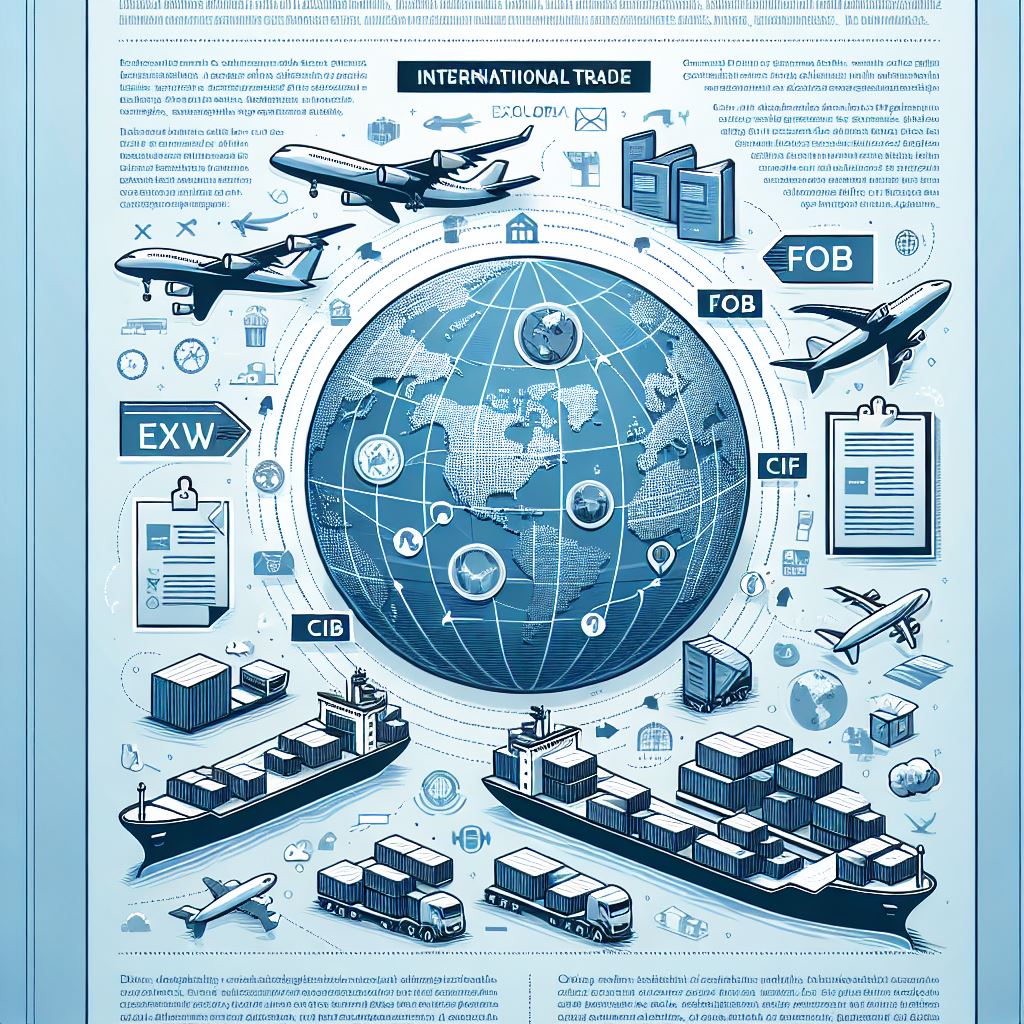
International trade is a comprehensive process that involves numerous procedures, documents, and legal regulations. In this process, clearly and explicitly defining the rights and obligations of the buyer and the seller is of great importance for the smooth execution of commercial transactions. For this purpose, sales contracts are concluded between the parties, and the delivery terms are clearly specified in these contracts. In this way, both the parties and, where applicable, intermediary companies and the goods themselves are secured.
In international trade, delivery terms are determined within the framework of rules known as Incoterms (International Commercial Terms), which are published by the International Chamber of Commerce (ICC). Incoterms rules define the point at which the goods are deemed to be delivered, when the risk transfers from the seller to the buyer, and which party bears the transportation, insurance, and customs costs. In this respect, Incoterms are not contracts of carriage; rather, they are standardized commercial terms used in sales contracts.
When determining the delivery term, issues such as the place of delivery, mode of transport, cost sharing, insurance obligations, and customs procedures are clarified. Once the responsibilities of the buyer and seller are mutually determined, the commercial process is initiated.
Delivery Terms Used in International Trade
Incoterms rules consist of a total of 11 delivery terms. These terms can be ranked from the point where the seller has the least responsibility to the point where the seller has the most responsibility. While some delivery terms can be used for all modes of transport, others are specific to sea and inland waterway transport.
Delivery Terms Applicable to All Modes of Transport
EXW – Ex Works
FCA – Free Carrier
CPT – Carriage Paid To
CIP – Carriage and Insurance Paid To
DAP – Delivered at Place
DPU – Delivered at Place Unloaded
DDP – Delivered Duty Paid
Delivery Terms Applicable Only to Sea and Inland Waterway Transport
FAS – Free Alongside Ship
FOB – Free On Board
CFR – Cost and Freight
CIF – Cost, Insurance and Freight
EXW – Ex Works
Under the EXW delivery term, the seller’s responsibility is limited to making the goods available at their own premises or at another specified place at the buyer’s disposal. From this point onward, all costs and risks, including transportation, insurance, export, and import procedures, belong to the buyer. The risk transfers to the buyer at the moment the goods are placed at the buyer’s disposal. Under this delivery term, buyers generally work with a transport organizer or a freight forwarder.
FCA – Free Carrier
Under the FCA delivery term, the seller delivers the goods to the carrier designated by the buyer at the specified place after completing export customs procedures. The risk transfers to the buyer at the moment the goods are delivered to the carrier. FCA is widely used in international trade due to its suitability for different modes of transport.
FAS – Free Alongside Ship
Under the FAS delivery term, the seller brings the goods alongside the ship at the designated port of loading and completes the export customs procedures. The risk transfers to the buyer once the goods are placed alongside the ship.
FOB – Free On Board
Under the FOB delivery term, the seller is responsible for loading the goods onto the ship at the port of loading. The risk transfers to the buyer at the moment the goods are loaded on board the ship.
CPT – Carriage Paid To
Under this delivery term, the seller bears the transportation costs up to the designated place of destination. However, the risk transfers to the buyer once the goods are delivered to the first carrier. The seller is not obliged to arrange insurance.
CIP – Carriage and Insurance Paid To
Under the CIP delivery term, in addition to CPT, the seller is obliged to arrange insurance for the goods. The insurance provides coverage against damage or loss that the goods may suffer during transportation. The risk transfers to the buyer when the goods are delivered to the carrier.
CFR – Cost and Freight
Under the CFR delivery term, the seller pays for the loading of the goods onto the ship and the freight costs up to the port of destination. However, the risk transfers to the buyer once the goods are loaded onto the ship at the port of loading.
CIF – Cost, Insurance and Freight
The CIF delivery term has the same structure as CFR. In addition, the seller is obliged to arrange insurance for the goods. The risk transfers to the buyer once the goods are loaded onto the ship.
DAP – Delivered at Place
Under the DAP delivery term, the seller brings the goods to the specified place of delivery in the buyer’s country. Export customs procedures are the responsibility of the seller, while import customs procedures and taxes are borne by the buyer. The risk transfers to the buyer once the goods reach the place of delivery.
DPU – Delivered at Place Unloaded
Under the DPU delivery term, the seller delivers the goods unloaded at the specified place. All responsibilities, including unloading, belong to the seller. The risk transfers to the buyer after the goods have been unloaded.
DDP – Delivered Duty Paid
Under the DDP delivery term, the seller brings the goods to the place designated by the buyer and bears all costs, including export and import customs duties and taxes. Although the seller is not obliged to arrange insurance under this delivery term, insurance is commonly preferred in practice since responsibility remains with the seller throughout the delivery process. DDP is the delivery term that imposes the greatest responsibility on the seller.
Delivery and Payment Methods in Foreign Trade
In foreign trade, delivery terms vary depending on the increase or decrease in responsibilities between the buyer and the seller. Along with delivery terms, payment methods also play a decisive role in the distribution of commercial risk. Advance payment, open account payment, documentary collection, acceptance credit payment, and letter of credit are among the most commonly used payment methods.
After the parties agree on the delivery and payment terms, the documents and contracts required by the relevant delivery term are prepared. The delivery process begins with the seller, and the commercial process is completed when the buyer receives the goods and confirms the completion of the transaction.


 Popular News
.png)