
The World’s Largest Automated Port, Tuas Project
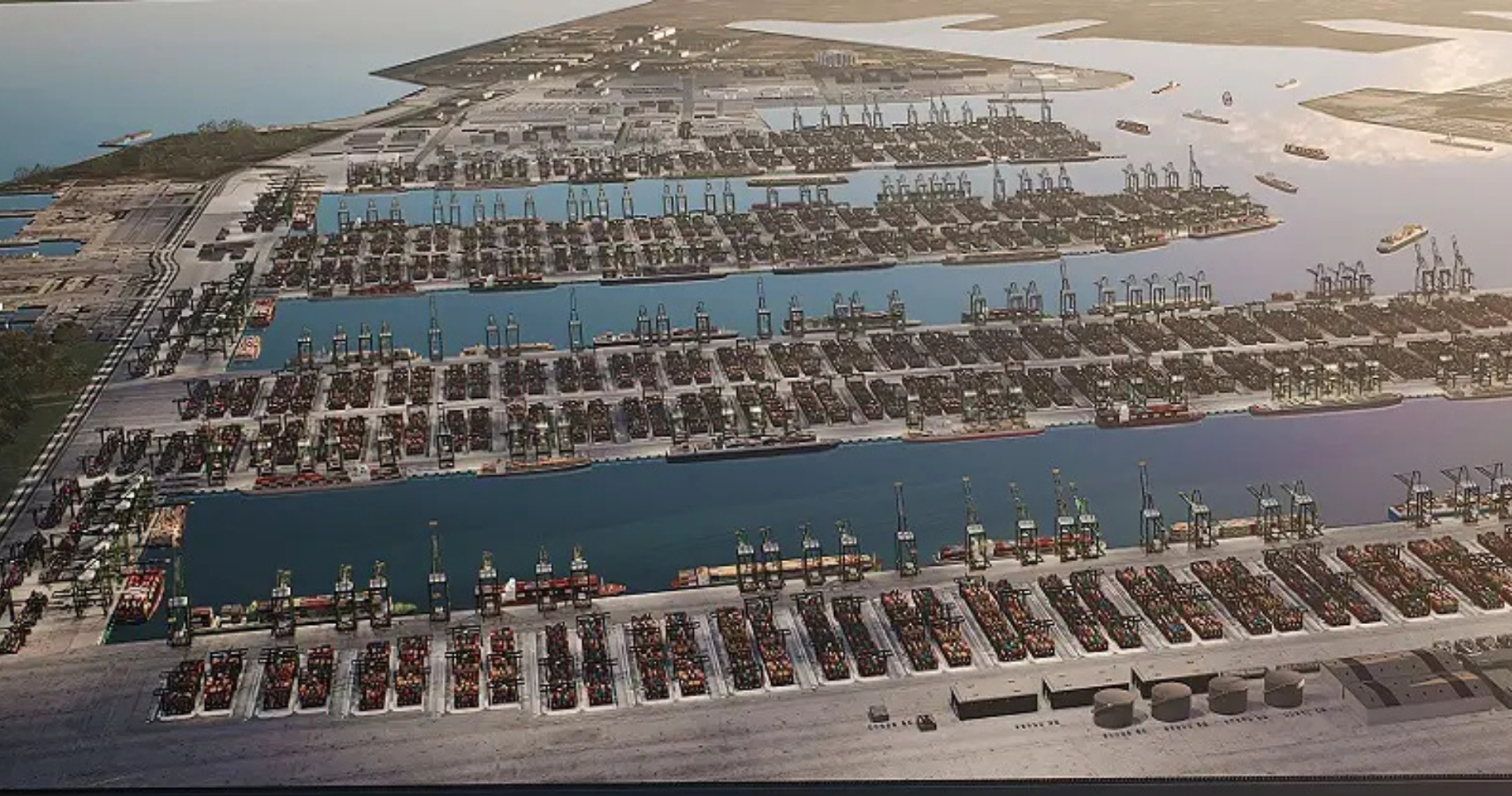
Singapore is implementing one of the largest infrastructure projects in its history to maintain its leadership position in maritime transportation and meet the logistics demands of the future. Located on the western coast, Tuas Port is planned to be completed by 2040. Once fully operational, it will become the world’s largest fully automated container terminal, with an annual capacity of 65 million TEU, positioning itself as one of the most critical hubs in global trade.
Mega Logistics Operations in a Single Hub
Tuas Port is designed to consolidate Singapore’s existing container operations into a single location. This system will take over the workload of terminals such as Tanjong Pagar, Keppel, Brani, and Pasir Panjang, aiming to deliver faster, more efficient, and fully integrated operations.
The primary objectives of the project are to:
- respond to increasing global trade volumes
- provide infrastructure suitable for mega container vessels
- enhance competitiveness by accelerating logistics processes
Mega Construction Above and Below the Sea
One of the most striking aspects of the Tuas project is its large-scale underwater engineering works.
- In Phase 1, 221 massive concrete structures were installed
- In Phase 2, an additional 227 units were added to build 8 km more seawall
In total, 448 giant structures have created approximately 16.5 km of seawall
Through these massive constructions, Singapore is not only building a port but also expanding its geography by generating new land.
Fully Automated Port: The Era of Human-Minimized Operations
Tuas Port is being developed as a fully digital and automated system, going far beyond traditional port models.
In next-generation operations:
- Electric autonomous vehicles will transport containers
- Remote-controlled cranes will handle cargo
- All operations will be managed from a centralized control center
- 5G infrastructure and AI systems will direct operations
This model effectively transforms the port into a “data-driven physical operations platform.”
65 Million TEU: A New Global Benchmark
When completed, Tuas Port will:
- cover an area of 3,300 acres
- feature 66 berths
- reach an annual capacity of 65 million TEU
This capacity significantly exceeds Singapore’s 44.6 million TEU throughput recorded in 2025, clearly reflecting the country’s long-term growth strategy.
Port Relocation, Urban Expansion
The Tuas project is not only a logistics investment but also a strategic urban transformation initiative.
With the relocation of port operations westward:
- centrally located port areas will be freed up
- approximately 2,471 acres of land will become available
- nearly 30 km of coastline will be opened for redevelopment
These areas are planned for residential, commercial, and recreational use.
Towards a Greener Port
Singapore is positioning Tuas Port not only as the largest but also as a sustainable port of the future.
The project includes:
- the use of electric equipment
- energy-efficient systems
- smart grid solutions
with a long-term goal of achieving net-zero emissions in the coming decades.
New Competitive Arena: Smart Ports
Tuas Port demonstrates that competition in global logistics is no longer defined solely by geographic advantage, but by:
- speed
- data management
- automation
- flexibility
- sustainability
Singapore’s connectivity with over 600 ports worldwide is being elevated through this project into a fully smart logistics hub ecosystem.
Conclusion
Tuas Port is more than just an infrastructure project; it represents the future of digitalized supply chains, autonomous port operations, sustainable logistics models.
In the coming years, the direction of global logistics competition is likely to be shaped by the model that Singapore is building with Tuas Port.
Source: Indux


 Popular News

.png)