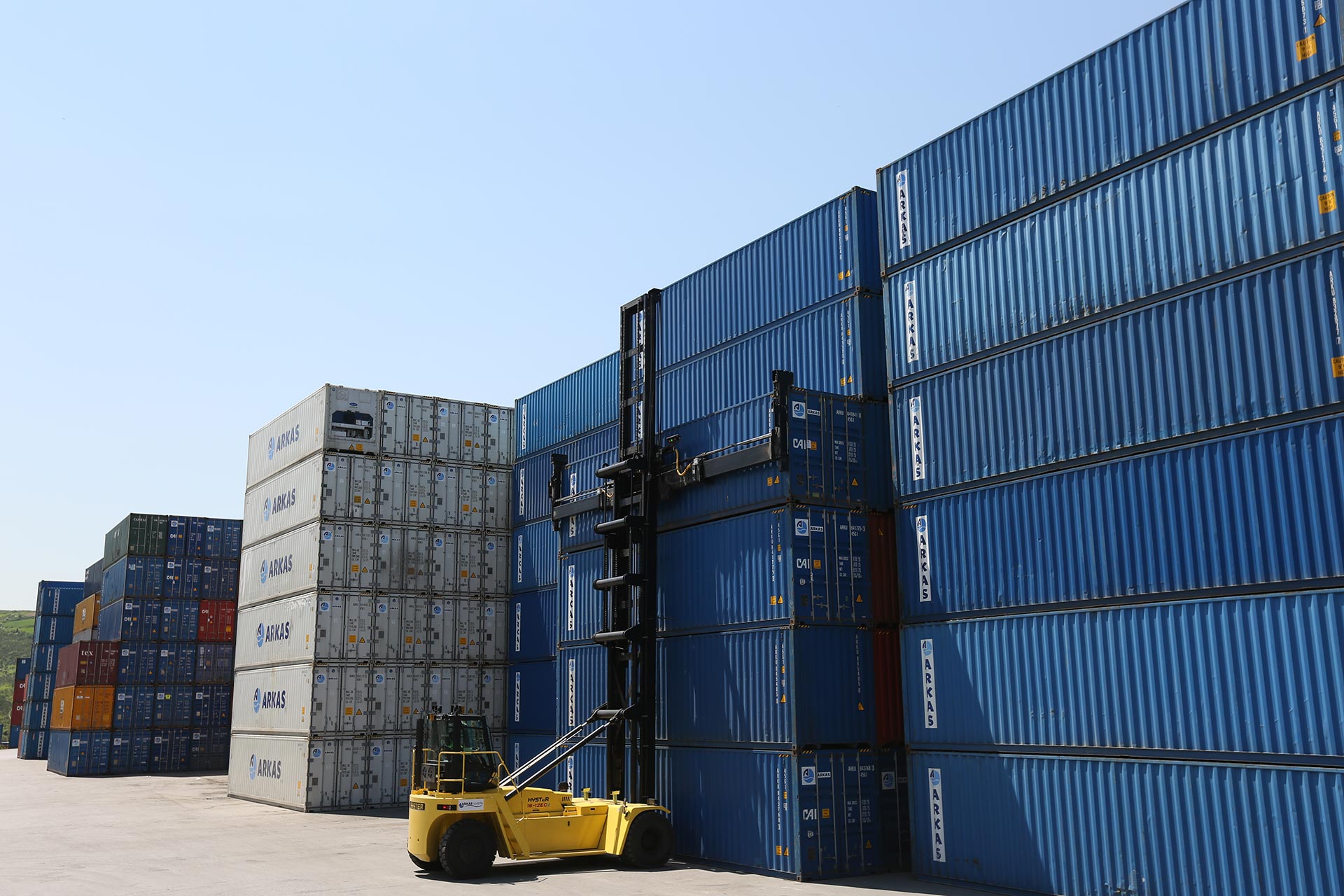

May 2026 Outlook for Türkiye’s Foreign Trade

The foreign trade data for May 2026, published by the Republic of Türkiye Ministry of Trade, reveals that Türkiye experienced a short-term contraction in foreign trade volume, while maintaining a limited growth trend overall throughout the year. Despite declines in both exports and imports, there is a noticeable relative improvement in the trade balance.
Decline in Exports and Imports in May
Compared to the same month of the previous year, in May 2026:
- Exports decreased by 9.3% to $22.5 billion
- Imports decreased by 10.7% to $28.1 billion
- Foreign trade volume declined by 10.1% to $50.6 billion
These figures reflect the impact of slowing global demand, fluctuations in energy prices, and regional geopolitical developments on trade performance.
However, the faster decline in imports compared to exports contributed to a partial improvement in the trade deficit.
Moderate Growth in January–May Period
In the first five months of 2026, a more balanced outlook emerges:
- Exports increased by 0.3% to $111.2 billion
- Imports increased by 1.2% to $153.9 billion
- Foreign trade volume rose by 0.8% to $265 billion
These figures indicate that modest but positive annual growth is continuing.
Partial Improvement in Trade Balance
In May, the export-to-import coverage ratio:
- Increased to 80.1%
Excluding energy:
- Reached 95.2%
Excluding both energy and gold:
- Rose to 97.6%
This clearly demonstrates that the trade deficit is still significantly influenced by energy and commodity dependency.
Top Trade Partners
Exports (May 2026):
- 🇩🇪 Germany – $1.7 billion
- 🇺🇸 United States – $1.5 billion
- 🇮🇹 Italy – $1.16 billion
Top 10 countries’ share of export: 46%
Imports (May 2026):
- 🇨🇳 China – $3.43 billion
- 🇷🇺 Russia – $2.48 billion
- 🇩🇪 Germany – $2.04 billion
Top 10 countries’ share of import: 48.8%
These figures highlight the continued importance of both the European Union and Asia in Türkiye’s trade structure.
Sectoral Distribution: Manufacturing Leads
Exports:
- Manufacturing Industry: 94.5%
- Agriculture: 3.3%
- Mining: 1.6%
Imports:
- Manufacturing Industry: 77.1%
- Mining: 15.3%
- Agriculture: 4.7%
This structure confirms that manufacturing remains the dominant driver of Türkiye’s foreign trade.
Trade Composition by BEC Classification
In May:
- Largest export category: Intermediate goods ($11.7 billion)
- Largest import category: Intermediate goods ($20.4 billion)
This indicates that the Turkish economy still has a high dependency on imported intermediate goods for production.
Logistics and Supply Chain Implications
The May 2026 data provides important signals for the logistics sector:
- Fluctuations in global demand directly impact freight volumes
- Energy costs shape the trade deficit through import dependency
- Strong trade ties with the EU increase the importance of rail and intermodal logistics investments
In particular, the Middle Corridor, intermodal transportation, and Europe-linked logistics routes continue to play a critical role in Türkiye’s trade dynamics.
Although the May 2026 foreign trade data signals a short-term contraction, it also shows that Türkiye’s economy is progressing within a balanced and controlled growth trajectory over the year.
The improvement in the export-to-import coverage ratio supports better management of the trade deficit, while energy dependency and reliance on imported intermediate goods remain key structural challenges.
In the coming period, Türkiye’s logistics competitiveness will not be determined solely by trade volume, but also by sustainable, integrated, and multimodal logistics infrastructure investments.
Source: Ticaret.gov


 Popular News
.png)