
What Are 1PL, 2PL, 3PL, 4PL Logistics Models?
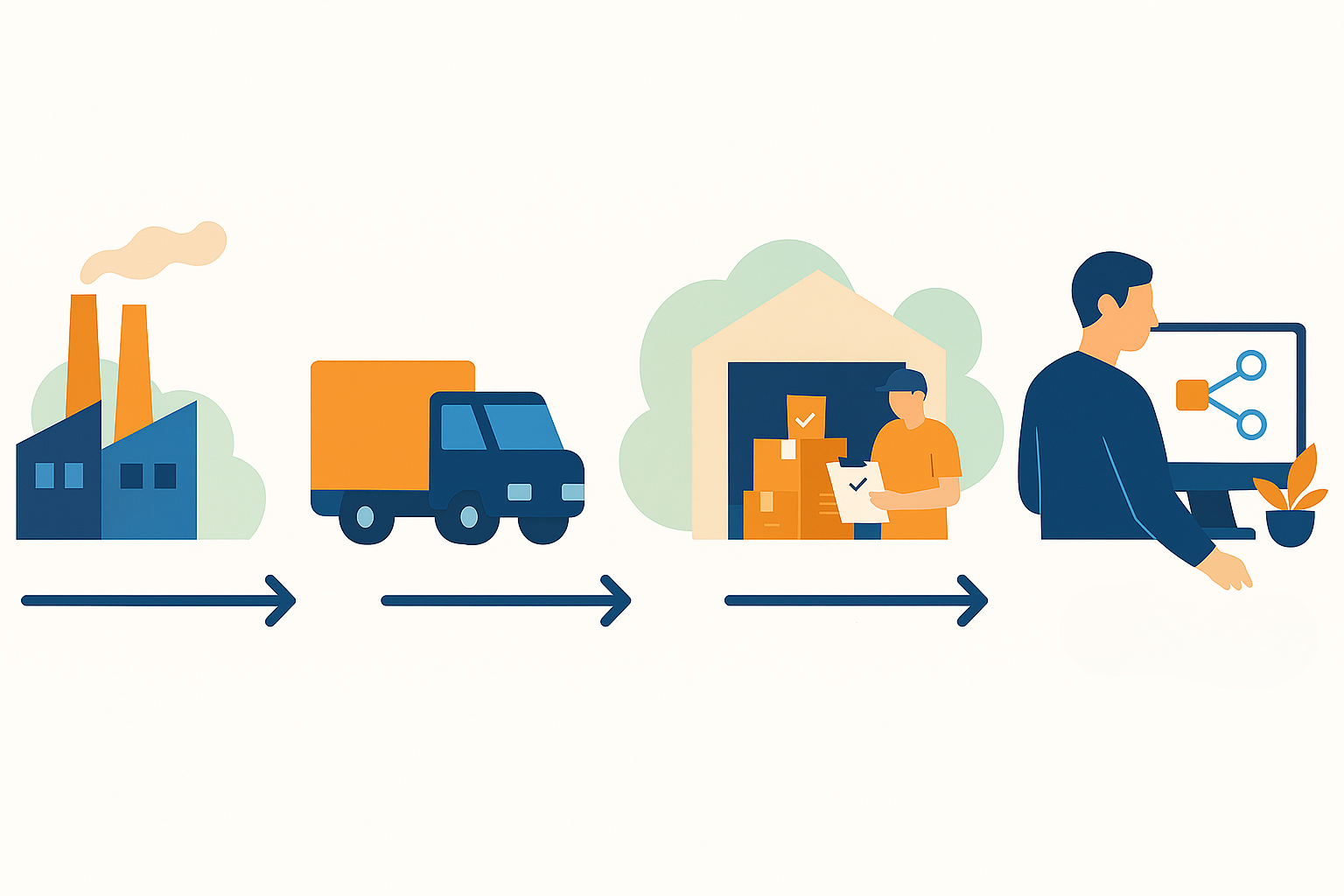
The logistics sector encompasses a variety of service types that enable businesses to manage their supply chains more efficiently and quickly. Logistics services cover the entire process from the point of production to the delivery of products to the end consumer. At each stage, different logistics service providers may be involved. Logistics service types are classified under concepts such as 1PL, 2PL, 3PL, and 4PL, each defined within specific roles and responsibilities. These classifications offer different business models for managing logistics needs and allow companies to deliver their products to the market faster and at lower cost.
1PL (First-Party Logistics): Direct Transportation by the Manufacturer
1PL (First-Party Logistics), which represents the most basic stage of the supply chain, refers to transportation carried out directly by the manufacturer. In this model, the manufacturing company handles the transportation of its products using its own resources and does not rely on any external logistics service providers. This method, where transportation is performed using the company’s own vehicles and personnel, is generally preferred by small and medium-sized enterprises.
2PL (Second-Party Logistics): Transportation Companies
This model refers to a structure in which a manufacturer or distributor works with a professional transportation company to move its products. In this case, the manufacturer outsources transportation services to an external carrier. Transportation vehicles and, in some cases, storage facilities are provided by a company that specializes in transportation solutions. 2PL represents the first step toward broader logistics coverage and is widely preferred for meeting national or international transportation needs. It allows companies to choose among various transportation modes such as road, sea, air, and rail, offering flexibility especially for businesses that need to distribute products across wide geographic areas.
3PL (Third-Party Logistics): Outsourcing Logistics Operations
To manage logistics processes more efficiently and professionally, companies delegate these operations to specialized 3PL providers. Third-party logistics outsourcing enables businesses to transfer logistics functions such as transportation, warehousing, inventory management, order processing, and distribution to an external provider. This allows companies to focus more on their core activities while logistics operations are managed by professionals.
3PL service providers offer significant advantages, particularly in rapidly growing sectors such as e-commerce. The use of 3PL in e-commerce ensures fast and effective distribution of products in line with customer demand. Companies can access flexible warehousing and distribution networks during seasonal peaks or sudden increases in demand, thereby reducing operational burden.
4PL (Fourth-Party Logistics): Logistics Management Solutions
4PL is the most comprehensive logistics model, enabling the complete strategic management of logistics operations. 4PL providers take responsibility for all stages of the supply chain and offer integrated logistics management solutions to businesses. Beyond core logistics services such as transportation, warehousing, inventory management, and order fulfillment, 4PL solutions include strategic planning, analysis, and optimization of the entire supply chain. This approach provides businesses with transparency and control at every stage of their logistics processes.
The 4PL model is particularly suitable for companies with large and complex supply chains operating in global markets. In this structure, the 4PL provider manages multiple 3PL providers and logistics partners, ensuring seamless coordination across all logistics activities. This service model eliminates the need for businesses to develop their own logistics infrastructure and leverages technology and data analytics to drive continuous improvement throughout the supply chain. As a result, 4PL offers long-term strategic logistics advantages for companies seeking to manage their operations at a strategic level.
To manage your logistics processes more efficiently, flexibly, and transparently, you can benefit from digital logistics solutions with Shipeedy.com.


 Popular News

.png)
 .png)