
The Busiest Maritime Routes
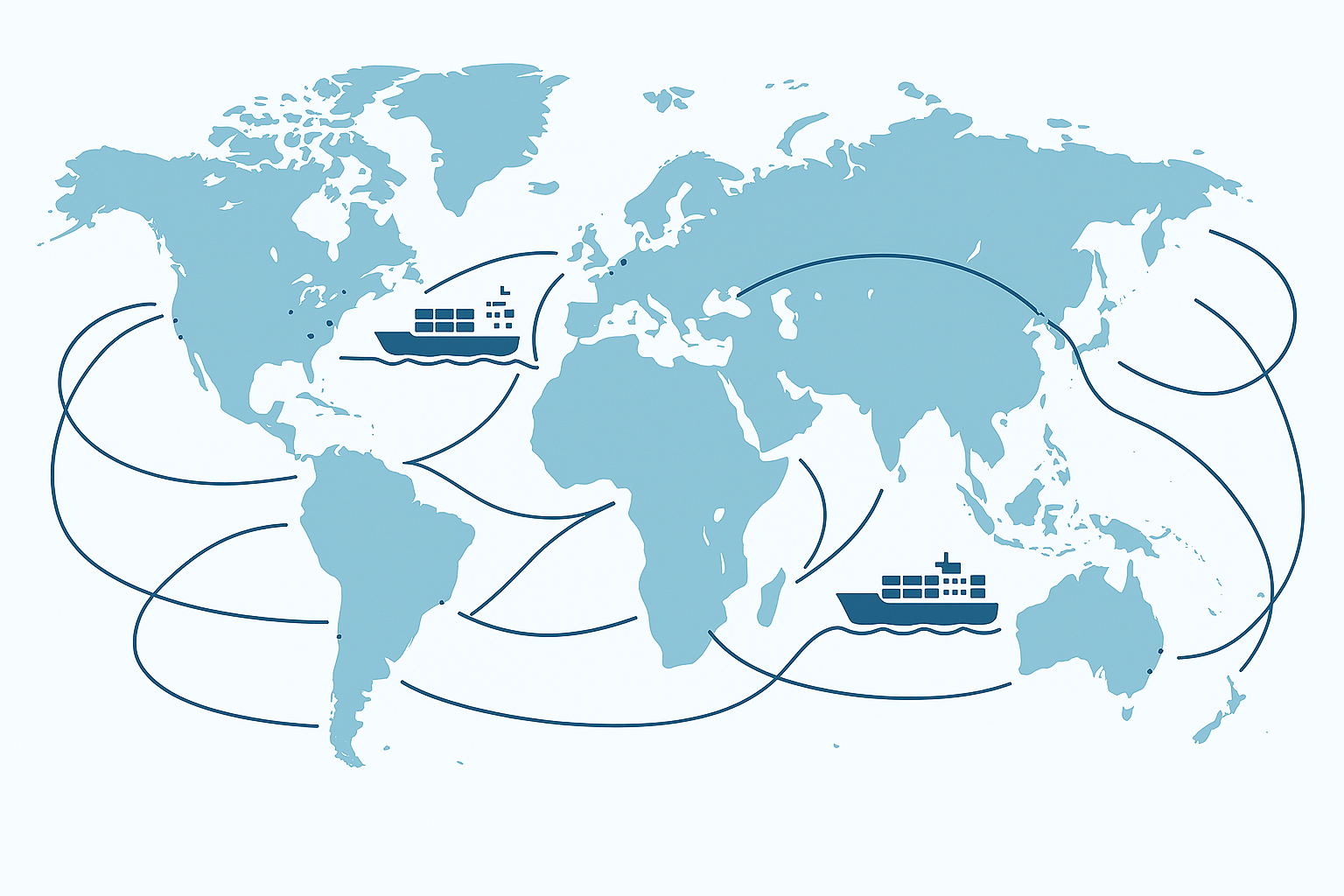
Maritime transportation is a driving force in global trade and is a primary choice especially for countries with coastlines. Through maritime transportation, intercontinental connections are established, making it easier for cargo to reach its designated ports. By determining the most suitable sea route from the port of loading to the port of discharge, the supply chain can continue smoothly. At the same time, selecting the right route for cargo minimizes the risk of time loss and offers cost advantages for companies.
Over time, while some routes have lost their importance due to developmental changes, others have continued to gain prominence as the busiest maritime routes. When examining the common characteristics required for a route to be considered heavily trafficked, one key factor is the number of port countries accessible along that route. For example, when looking at the Atlantic route, many countries are located along this corridor. Countries such as Canada, Greenland, and Norway, which have coastlines along the Atlantic Ocean, frequently use maritime trade due to their geographic location. Another important aspect of route selection is its suitability for transporting various types of goods. Due to its location, the North Atlantic route is a preferred and busy corridor for fish trade.
The Busiest European Maritime Routes
When examining the busiest European maritime routes, the Port of Rotterdam, located at the delta of the Rhine River, is the first that comes to mind. It is known as the largest port in Europe. Due to its strategic location, this port serves as a distribution hub for all European countries. The port has 122 berths, a very large storage area, and numerous terminals and docks. The greater the number of vehicles and facilities a port has, the higher its operational preference rate becomes.
Another busy European maritime route includes the Port of Hamburg, located on the Elbe River. It is recognized as Europe’s second-largest port. Due to its large surface area, it is frequently used for container transportation and also serves as a major hub for general cargo operations. In addition, the port supports sustainable logistics through its use of environmentally friendly technologies. As a result, energy consumption is minimized and efficient operational processes are implemented.
The Busiest Asian Maritime Routes
When looking at Asia in terms of major maritime routes, the strategic importance of several key ports immediately stands out. Among the busiest Asian maritime routes is the Strait of Malacca, located in Southeast Asia. One important factor in transportation is the size of land or sea area it covers. The Port Klang, located along the Strait of Malacca, covers an area of approximately 9,639 square kilometers and holds a highly strategic position in maritime transportation. In addition to general cargo vessels, this strait also serves as a primary route for oil tankers heading toward Japan and Middle Eastern ports.
Another major maritime hub in Asia is the Port of Shanghai, which covers an area of 43.5 square kilometers and is one of the busiest and largest ports in the world. For a port to have critical importance, it must possess certain characteristics, such as the number of berths and its capacity to service vessels.
Located in the Yangtze River Delta in China, the Port of Shanghai has 125 berths and can accommodate up to 2,000 container vessels. These features significantly increase its preference in global trade. Another busy port on Asian maritime routes is the Port of Singapore, located near the Singapore Strait in China’s vicinity. This port is important for food logistics and also serves as a major transshipment hub. One of the defining features of a busy port is the number of connections it has with other international ports. The Port of Singapore is connected to more than 600 ports worldwide, making it one of the most frequently used hubs in global logistics routes.
The Busiest African Maritime Routes
Each continent has its own major maritime routes. When referring to the busiest African maritime routes, Tanger Med Port, located in the northern Africa region near the Strait of Gibraltar, stands out. Situated in northern Morocco, this port offers berthing facilities and extensive storage areas. Tanger Med is a key transit point for logistics operations between Europe, Africa, and the Americas. With its advanced technological infrastructure, the port efficiently manages high-volume container transportation operations.
The Busiest American Maritime Routes
When discussing the busiest maritime routes in the Americas, it is essential to mention the Port of Los Angeles, the largest port in the United States, located on the country’s west coast. This port is the most active in terms of trade volume among all U.S. ports. It also plays a critical role in receiving cargo arriving from Asia into the United States. Continuous investments in transportation, storage, and operational infrastructure support its ongoing development. The technological capabilities of ports significantly influence how busy and preferred they are.
The Port of Los Angeles is equipped with the necessary facilities for handling cargo such as petroleum, natural gas, and fish. Another major U.S. maritime hub is the Port of New Jersey, located on the east coast. As a large natural harbor, New Jersey holds a leading position in terms of cargo volume on the East Coast. The port is part of the Atlantic Ocean and integrates rail, air, and road transportation networks. By partnering with Shipeedy and utilizing the busiest maritime routes, you can accelerate your logistics processes and optimize your operational flow.


 Popular News

.png)
 .png)